Registration Fees
One CEU (Continuing Education Unit) will be awarded per day of attendance.
Click here to
register.
For further information, please contact:
Dr. Tugrul U. Daim
Department of Engineering & Technology Management
Maseeh College of Engineering & Computer Science
Portland State University
Portland, Oregon 97207-0751 USA
E-mail: tugrul@etm.pdx.edu
Phone: +503 725-4582
Fax: +503 725-4667
Jay Lee, Ohio Eminent Scholar and L.W. Scott Alter Chair Professor , University of Cincinnati; and Director, NSF Multi-Campus Industry/University Cooperative Research Center on Intelligent Maintenance Systems (IMS), University of Cincinnati, University of Michigan, Missouri University of S&T; and Changjiang Chair Professor and Dean, Advanced Industrial Technology Research Institute (AITRI), Shanghai Jiao Tong University, China
Innovation is not an option for today’s industry. For the past decade, globalization and transformation of the flat-world economy have produced vast new challenges for industry. Innovation is not just about new product development; it also refers to the creation of new value-added services to transform better productivity and business performance. As the practice of product design has expanded both in economic and social impact and in technological complexity, so has the demands upon innovative service systems. For example, GE Medical changed its name to GE Healthcare Technologies to expand its service business opportunities. Companies need to learn how to develop a dominant innovation business model with value-added service to compete globally.
This short course introduces the dominant innovation system and tools for product and service in a changing competitive global market. Examples will be given to illustrate how to formulate “gaps” between product and customer’s invisible needs using an innovation matrix and application space mapping tools. In addition, examples will be used to illustrate how world-class companies and small- to medium-size companies can transform to innovative leaders.
The Intelligent Maintenance Systems (IMS) is a multi-campus National Science Foundation (NSF) Industry/University Cooperative Research Center (I/UCRC) between the University of Cincinnati, the University of Michigan, and the University of Missouri-Rolla. The focus of the IMS Center is on frontier technologies on autonomic computing and embedded prognostics predictive to enable products and machines to achieve near-zero-downtime performance. The Center serves as a catalyst as well as an enabler to assist company members to transform their operation strategies from today’s “Fail-to-Fix/Fly-to-Fix (FAF)” to “Predict-and-Prevent (PAP)” performance. Currently, the Center is supported by over 40 company members and sponsors, including Toyota, GM, DaimlerChrysler, Ford, Harley Davidson, Boeing, Honeywell, Caterpillar, Festo, GE Aviation, Samsung, P&G, Komatsu, Omron, ITRI Taiwan, Adventech (Taiwan), Chevron, AMD, BorgWarner, Bosch, CISCO, Nissan (Japan), Siemens (Germany), Delta Electronics (Taiwan), Alstom (France), and the Army Research Lab. For more information please visit the IMS web site at www.imscenter.net.
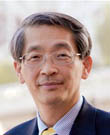 Dr. Jay Lee is Ohio Eminent Scholar and L.W. Scott Alter Chair Professor at the Univ. of Cincinnati and is founding director of the National Science Foundation (NSF) Industry/University Cooperative Research Center (I/UCRC) on Intelligent Maintenance Systems (IMS www.imscenter.net ), which is a multi-campus NSF Center of Excellence between the University of Cincinnati (lead institution), the University of Michigan, and Missouri University of S&T in partnerships with over 40 global companies including P&G, Toyota, GE Aviation, Boeing, AMD, Caterpillar, Siemens, DaimlerChrysler, ETAS, Festo, Harley-Davidson, Honeywell, ITRI (Taiwan), Omron (Japan), Bosch, Parker Hannifin, BorgWarner, Spirit AeroSystems, Nissan (Japan), Syncrude (Canada), CISCO, Alstom (France), Delta Electronics (Taiwan), and the Army Research Lab.
He is Changjiang Chair Professor as well as Dean of the newly established Advanced Industrial Technology Research Institute (AITRI) at Shanghai Jiao Tong University. In addition, he is an honorary professor of City University of Hong Kong and serves as a visiting professor for a number of institutions including Cranfield University in the UK, Lulea University of Technology in Sweden, University of Manchester, Hong Kong Polytechnic University, Xian Jiao Tong University, and Harbin Institute of Technology (HIT) in China. His current research focuses on dominant innovation design tools and smart infotronics technologies for service and maintenance automation applications.
Previously, he was Director for Product Development and Manufacturing at United Technologies Research Center (UTRC), East Hartford, Connecticut, and served as program directors for a number of programs at NSF during 1991-1998, including the Engineering Research Centers (ERCs) Program, the Industry/University Cooperative Research Centers (I/UCRCs) Program, and the Division of Design, Manufacture, and Industrial Innovation. In addition, he served on the board of Manufacturing and Engineering Design (BMAED) of the National Research Council during 2000-2005, Board of Directors for the National Center for Manufacturing Science (NCMS) during 1999-2001, as well as advisory member for a number of academic institutions including Johns Hopkins University and Cambridge University. He conducted research work at the Mechanical Engineering Lab of the Ministry of International Trades and Industry (MITI) as a Japan Science and Technology Agency (STA) Fellow in 1995, a Japan Society for Promotion of Science (JSPS) Fellow at the University of Tokyo in 1997, and a visiting professor at the Swiss Institute of Technology (EFFL) in Lausanne, Switzerland, in July 2004. He also served as an adjunct professor for a number of academic institutions including Johns Hopkins University.
Currently, he serves as advisor to a number of global organizations, including IBM MAXIMO Executive Advisory Council, Industrial Technology Research Institute (ITRI) in Taiwan, Japan Productivity Center (JPC), and the Academy of Machinery Science and Technology in China. In addition, he serves as editor and associate editor for a number of journals including IEEE Transaction on Industrial Informatics, International Journal on Prognostics and Health Management (IJPHM), International Journal of Asset Engineering and Management, International Journal on Service Operations and Informatics, and Tsinghua Science and Technology Journal. He has authored/co-authored over 150 technical publications, edited two books, contributed numerous book chapters, owns a number of patents, two trademarks, and he has delivered numerous invited lectures and speeches, including over 130 invited keynote and plenary speeches at major international conferences.
Dr. Lee received 2008 CIE-USA Distinguished Achievement Award, Professor of the Year Award and Distinguished Engineering Research Award from the University of Cincinnati in 2007, Milwaukee Mayor Technology Award in 2003, Milwaukee Idea Award in 2002, and was also a recipient of the SME Outstanding Young Manufacturing Engineering Award in 1992. He is a Fellow of ASME, SME, as well as a founding fellow of the International Society of Engineering Asset Management (ISEAM).

John Patton, PMP, President, CEO, Cadence Management Corporation, USA
What is the difference between a standard for project management and a methodology for using a standard? What are the essential elements of a methodology? How does project practice maturity influence the selection of a governance model or project management office?
What is the best way to implement a project management methodology? What are the key tasks of implementation? What is the annual cycle which results in continuous improvement? How does one show executives the value of using best practices?
These questions are answered by the speaker through presentation, case histories, and group discussions during this tutorial. The tutorial is targeted toward people who would like to increase productivity in their institution or obtain a sustainable competitive advantage in their company.
 John Patton is founder of Cadence Management Corporation and creator of the methodology for practical application of practices identified in the PMI standards. He is director of the Cadence Global Solution Provider Program, consisting of native speakers providing Cadence branded training and consulting services in the local language with the local culture in mind in various countries around the world.
Mr. Patton has been a member of the Project Management Institute (PMI) since 1983 and is a contributor at congresses and research working sessions on topics of project acceleration and complexity. He is currently on an editorial board to publish a PMI-sponsored book on project complexity, and he was chair of the Certification Committee for OPM3 2006-2009.
Mr. Patton is a sponsor of PMI Global Congresses. He has had experience in all aspects of organizational project management (OPM), from its roots in strategic planning into portfolios, programs and projects, through implementation into ongoing operations. In the fall of 2009, his company, Cadence, was given the Provider of the Year Award from PMI.
Currently serving on the advisory board of the Department of Engineering and Technology Management in the Maseeh College of Engineering and Computer Science at Portland State University (PSU), Mr. Patton obtained an MBA from PSU, a diploma from the University of Barcelona (Spain), and an undergraduate degree in Arts and Sciences from the University of Oregon.
Mr. Patton is a world-class consultant for companies like United Space Alliance (Space Shuttle), Starbucks Coffee, eBay, Logitech, and Boston Scientific, implementing his methodology and facilitating rapid project start-up planning.
Frederick Betz, General Partner, Venture2Reality; Former Program Officer, National Science Foundation, USA
One of the central issues in knowledge management is how new knowledge is created. In modern society and organizations, new knowledge is created though the activities of research. Modern research is focused as scientific or technological or engineering research. Thus, within knowledge management, the management of science or the management of technology are sub-topics—useful in connecting research and engineering personnel into the knowledge processes of other organizational personnel. In a nation, science knowledge management interconnects with technology knowledge management—both of which interconnect with economic growth and global economic competitiveness. Our characterization of research infrastructure as a national research system follows in the contemporary trend of the Organization of European Community Development (OECD) in conducting international studies of different science and technology structures. But we will add to the idea a model of research infrastructure and processes.
All industries (manufacturing or services) use technologies, and science provides the knowledge bases for inventing and improving technologies. Science is focused on discovering and explaining nature, while technology is focused on inventing ways to manipulate nature. Knowledge management should thus include connections to the knowledge processes of research and invention in a business. Thus, within an international corporation, science and technology and innovation connect in managing knowledge through different kinds of information systems: 1) R&D knowledge management systems and 2) product and production development management systems and with 3) marketing and customer relation management systems. And all these interconnections in a business are necessary for technological competitiveness.
Multidisciplinary research settings now frequently occur in universities—as strategically focused research centers of science and engineering. Such centers support groups of research projects that interact and add up together to more than the sum of their parts – strategic and multi-disciplinary research thrusts. Thus, in the modern research university (and in industrial and governmental research laboratories), researchers at the cutting edge seldom work entirely within the specialty area they were trained in as graduate students. And now the omnipotent complement to scientific method is science funding. Scientific research is expensive. Research projects require funding by government, philanthropy, or industry. And the larger the scientific instrument and the more complex the project, the costs grow tremendously—so large as to have been given its own name: big science. But even small science, individual research grants, also requires funding. This is obtained procedurally by writing research proposals, submitting proposals to a research funding agency, winning a research grant, and administering the funds to assemble a research team and perform a research project. Thus, organizational procedures –research teams, research projects, research funding, research leadership—are all essential to the scientific process.
The topics we will cover for understanding the modern context of research progress are:
RESEARCH INFRASTRUCTURE
1. National Innovation System
2. Research Issues in Innovation
3. University Research
4. Government Research
5. Industrial Research
RESEARCH PROCESS
6. Scientific Method
7. Research Methods
8. Scientific Disciplines
9. Research Proposals
10. Research Programs
11. Selecting Research Projects
RESEARCH ADMINISTRATON
12. Managing Research Projects
13. Directing a Research Center
14. Technology Transfer from Research to Utility
 Dr. Frederick Betz received the B.S. in physics from the University of Chicago and Ph.D. in physics from the University of California at Berkeley. From 1975-98 he was Program Manager of the Engineering Directorate at the National Science Foundation, where he administered grants in the Engineering Research Centers Program, Industry/University Research Centers Program, and Engineering Education Coalition Program.
Dr. Betz was a professor in the Graduate School of the Department of Management of Technological Systems at the University of Maryland University College from 1998-2004. Since 2005 he has been a general partner in Venture2Reality, a company that brings sophisticated large company market intelligence aggregation tools to small- and mid-sized manufacturing companies in search of new products, markets and partners.
His books include Managing Technology (New Jersey: Prentice Hall, 1987); University/Industry Partnership for Economic Development (San Francisco: Jossey-Bass, 1988) (co-authored); Strategic Technology Management (New York: McGraw-Hill, 1993) (also published in Chinese (1997) and Japanese (2005) language editions); Managing Technological Innovation (John Wiley & Sons, 1st edition 1998, 2nd edition 2003); and Executive Strategy (John Wiley & Sons, 2001).
Benjamin C. Wu, Rockwell International Corp., The Boeing Company, University of California Irvine Systems Engineering Certificate Program, USA
Today, in the industry, we do not work alone. We work in teams. Take ME for example, it doesn’t matter whether you are specialized in solid or fluid mechanics, thermodynamics or heat transfer, structural or mechanical design, you will have to know the use of various problem analysis and decision making tools and methods, the more the better, to support your teams. These tools and methods may look simple; there are hidden pitfalls and drawbacks that you must beware. Since it takes time for you to experience the difficulties and learn, taking this course can help you shorten your learning curve in your career path and become an effective team member.
This course is aimed at increasing your knowledge in key engineering decision making methods and tools that every engineering professional must know. Learn how to achieve the best possible balanced solution within terms of performance, delivery, and cost in today's design engineering environment. Gain an understanding of how to synthesize technical management solutions based on principles and practices such as, teamwork principles and practices, Integrated Product Process Development (IPPD), Kepner-Tregoe Methodologies, Analytic Hierarchy Process (AHP), Modern Quality Function Deployment (MQFD), Taguchi Methods, Statistical Process Control (SPC), Critical Chain Project Management (CCPM), Design Structure Matrix (DSM), Six Sigma concepts and practices with emphasis on inferential statistics, Risk/Opportunity Management, and others.
 Dr. Benjamin C. Wu is a mechanical engineer by training with 35 years of experience in computerized design and systems engineering.
For the past 18 years, in systems engineering, he has worked as a project manager and risk management team lead at Rockwell International Corporation and the Boeing Company. He is a subject matter expert (SME) in the application of a large number of problem analysis and decision making tools and methodologies.
Dr. Wu has been an instructor for the University of California Irvine Systems Engineering Certificate Program since 2005. He holds a BS in Mechanical Engineering from Washington State University (1968), an MS in Mechanical Engineering from the Ohio State University (1970), a PhD in Mechanics from Michigan State University (1980), an MS in Engineering Management from West Coast University (1985), and an MBA from California State University Dominguez Hills (2001).
Dr. Wu is a member of Sigma Tau, Tau Beta Pi, Delta Mu Delta, and Phi Kappa Phi. He is a Lean Six Sigma Master Blackbelt and QFD Greenbelt. He is a member of INCOSE and ASQ.
©2018 PICMET Inc. All rights reserved.