LEADERSHIP IN TECHNOLOGY MANAGEMENT AWARDS
Norman R.
Augustine
Vice Chairman and CEO
Lockheed Martin Corporation-USA
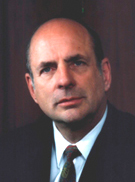 Norman R. Augustine
is currently a member of the faculty of Princeton University. He served and
Vice Chairman and Chief Executive Officer of Lockheed Martin Corporation
until his retirement. He had previously served as President of the
Corporation, a position he assumed upon the merger of Lockheed and Martin
Marietta in 1995. Before the merger, Mr. Augustine served as Chairman and
Chief Executive Officer of Martin Marietta Corporation from 1988-1995. Norman R. Augustine
is currently a member of the faculty of Princeton University. He served and
Vice Chairman and Chief Executive Officer of Lockheed Martin Corporation
until his retirement. He had previously served as President of the
Corporation, a position he assumed upon the merger of Lockheed and Martin
Marietta in 1995. Before the merger, Mr. Augustine served as Chairman and
Chief Executive Officer of Martin Marietta Corporation from 1988-1995.
Mr. Augustine joined Martin Marietta in 1977 as Vice President of Aerospace
Technical Operations. In 1980, he was appointed Vice President of Aerospace
Operations with responsibility for engineering, production, quality,
strategic planning, capital expenditures, and international programs. In
1982 he was elected a corporate Vice President and President of Martin
Marietta Denver Aerospace. Mr. Augstine was named Senior Vice President of
the Corporation in 1985, with primary responsibility for two major operating
companies, Martin Marietta Information and Communications Systems and Martin
Marietta Data Systems. Later in 1985 he was named Executive Vice President,
and in January 1986 he became President and Chief Operating Officer and was
elected a director of the Corporation. Mr. Augustine was elected Vice
Chairman and Chief Executive Officer in 1987 and became Chairman and Chief
Executive Officer in 1988.
Prior to joining Martin Marietta, Mr. Augustine served as Under Secretary of
the Army from 1975—1977. Previously, he served as Assistant Secretary of the
Army for Research and Development in 1973 and 1974, and from 1965 to 1970
served in the research and engineering organization of the Office of the
Secretary of Defense. He was Vice President of Advanced Programs for the
Vought Missiles and Space Company, a unit of the LTV Corporation, from 1970
to 1973, and earlier in his career was an engineering executive with Douglas
Aircraft Company from 1958 to 1965.
Mr. Augustine received a bachelor’s degree in aeronautical engineering
(magna cum laude) in 1957 and a master’s degree in 1959, both from Princeton
University.
Mr. Augustine has served as chairman of organizations such as the American
Red Cross, the National Academy of Engineering, the Defense Policy Advisory
Committee on Trade, and the Defense Science Board. He has received honorary
degrees from 17 colleges and universities. He received the National Medal of
Technology, the Distinguished Service Medal from the Department of Defense
on five different occasions, the Army Distinguished Service Medal, the NASA
Distinguished Public Service Medal, and the Department of Treasury Medal of
Merit, among others.
Go Back
GURUDUTH BANAVAR
Chief Technical Officer, VIOME, USA
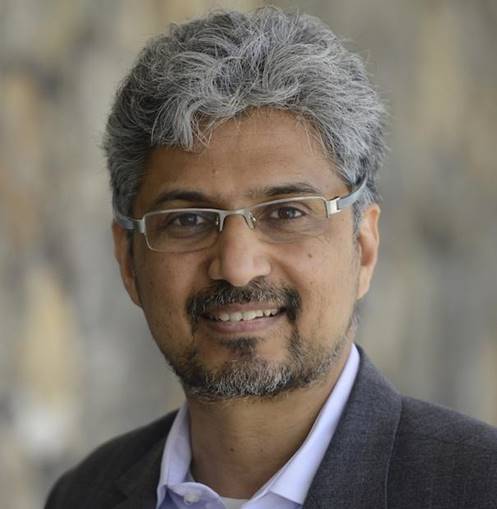 Dr. Guru Banavar believes in applying deep technology
innovations to solve major problems that humanity faces,
especially in healthcare and education. He is known for
his work on Watson AI, Smarter Cities, Services Innovation,
Mobile Computing, and Distributed Systems. Dr. Guru Banavar believes in applying deep technology
innovations to solve major problems that humanity faces,
especially in healthcare and education. He is known for
his work on Watson AI, Smarter Cities, Services Innovation,
Mobile Computing, and Distributed Systems.
He is currently developing AI systems
at Viome, a wellness company
that offers unprecedented visibility
into the biological ecosystem inside
each of us and delivers ongoing recommendations
to improve wellness
with a personalized diet and lifestyle
plan. Until recently, he was a senior
technology executive at IBM responsible
for advancing Watson AI technologies
and solutions, and was a member of CEO Ginni
Rometty's top executive team.
Dr. Banavar is a recognized thought leader who has spoken
on the Nobel, Aspen, Milken, and Turing stages. His
work has been featured in major international media
including the New York Times, Economist, Wall Street
Journal, and NPR. He received a national innovation
award from the President of India, and has served on NY
Governor Cuomo's commission for state resiliency. Dr.
Banavar has served on various industry and academic
boards, and was an elected member of the IBM Academy
of Technology. He has published extensively and holds
more than 25 US patents.
Go Back
DANIEL BERG
Distinguished Research Professor of Engineering, the University of Miami, USA
 Dr. Daniel Berg is a Distinguished Research Professor of Engineering at the University of Miami. Previously, he was Dean and Provost at Carnegie Mellon University (CMU) as well as Provost and President at Rensselaer Polytechnic Institute (RPI) and Institute Professor of Science and Technology. Dr. Daniel Berg is a Distinguished Research Professor of Engineering at the University of Miami. Previously, he was Dean and Provost at Carnegie Mellon University (CMU) as well as Provost and President at Rensselaer Polytechnic Institute (RPI) and Institute Professor of Science and Technology.
He received his B.S. in Chemistry and Physics from the City College of New York and his M.S. and Ph.D. in Physical Chemistry from Yale. He was employed by Westinghouse Electric in a variety of technical/managerial positions including Technical Director.
Dr. Berg serves as the American Editor of the International Journal of Services Technology and Management. He is the author of four books, five book chapters and over 80 refereed journal articles.
He is a member of the National Academy of Engineering, a Life Fellow of the Institute of Electrical and Electronic Engineers (IEEE), a Fellow of INFORMS, and a Fellow of the American Association for the Advancement of Science.
Dr. Berg's many awards and honors include the IEEE Engineering Management Section Educator of the Year Award; the IAMOT Award for Distinguished Achievement in Management of Technology; the IEEE Educational Activities Board Meritorious Achievement Award in Continuing Education; the National Academy of Engineering Service Award; the Townsend Harris Medal, City College of New York; the Wilbur Cross Medal, Yale University; and the Belden Prize for Mathematics.
Go Back
JOSEPH BORDOGNA
Deputy Director, NSF-USA
 Dr. Bordogna is Deputy Director and Chief Operating Officer
of the National Science Foundation. Complementing his NSF duties, he has
chaired committees on Manufacturing and Environmental Technologies within the
President’s National Science and Technology Council, he was a member of the
Federal Government’s Technology Reinvestment Project Team (TRP), and he serves
on the Partnership for a New Generation of Vehicles Committee (PNGV) and the
U.S.-Japan Joint Optoelectronics Project. Dr. Bordogna is Deputy Director and Chief Operating Officer
of the National Science Foundation. Complementing his NSF duties, he has
chaired committees on Manufacturing and Environmental Technologies within the
President’s National Science and Technology Council, he was a member of the
Federal Government’s Technology Reinvestment Project Team (TRP), and he serves
on the Partnership for a New Generation of Vehicles Committee (PNGV) and the
U.S.-Japan Joint Optoelectronics Project.
Dr. Bordogna received the BSEE and Ph.D. degrees from the University of
Pennsylvania and the S.M. degree from M.I.T. His career includes experience as
a line officer in the U.S. Navy, a practicing engineer in industry, a
professor at the university, a president of IEEE (Institute of Electrical and
Electronics Engineers), and a leader in science and technology policy in the
government.
Prior to his appointment at NSF, he served at the University of Pennsylvania
as the Alfred Fitler Moore Professor of Engineering, Director of the Moore
School of Electrical Engineering, and the Dean of the School of Engineering
and Applied Science. It was during his tenure at the University of
Pennsylvania that the highly acclaimed “Management and Technology Program” was
created by combining the strengths of the School of Engineering and the
Wharton School of Management for a unique undergraduate degree.
At NSF, Dr. Bordogna continued with his innovative ideas and creative
leadership by leading the development of new programs focused on expanding
research horizons into connecting the frontier of science and engineering with
service to society, producing a world-class engineering and science workforce,
and making sure that every student from kindergarten up through the highest
level of education has math and science capabilities.
Among the many honors Dr. Bordogna has received are his Fellow Awards in the
American Association for the Advancement of Science (AAAS), the American
Society for Engineering Education (ASEE), and the Institute of Electrical and
Electronics Engineers (IEEE).
Go Back
KLAUS BROCKHOFF
Otto Beisheim School of Management, Germany
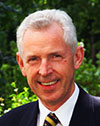 Dr. Klaus Brockhoff,
in a teaching career spanning more than 40 years, has held business faculty positions at six universities,
including the University of Bonn (Germany), University of Kiel (Germany), University of Lund (Sweden),
New Jersey Institute of Technology (United States), and currently, since 1999, WHU—Otto Beisheim School
of Management (Germany). A graduate of the University of Bonn and the University of Münster, and a former
research fellow at the University of California, Berkeley, Dr. Brockhoff has documented his research in
the areas of technology management, innovation management, business strategy, and business policy in
21 books and more than 280 articles, many of which were published in leading international research
journals, such as Management Science, Journal of Product Innovation Management, IEEE Transactions on
Engineering Management and Research Policy. He has consulted for numerous government and business
organizations and has received two noteworthy awards, the Max Planck Research Award and Karl Heinz
Beckurts Award. Dr. Brockhoff is also an elected member of the Berlin-Brandenburg Academy of Sciences
(Berlin) and the Academy of Technology (Berlin); he sat on the board of six journals (including Research
Policy, R&D Management and Technology Analysis & Strategic Management), two corporations (Steuler
Industriewerke, Metro Group), and three foundations (VolkswagenStiftung, Pro Futura Stiftungen, and
WHU Foundation). He holds an honorary doctorate from the University of Berne (Switzerland). Dr. Klaus Brockhoff,
in a teaching career spanning more than 40 years, has held business faculty positions at six universities,
including the University of Bonn (Germany), University of Kiel (Germany), University of Lund (Sweden),
New Jersey Institute of Technology (United States), and currently, since 1999, WHU—Otto Beisheim School
of Management (Germany). A graduate of the University of Bonn and the University of Münster, and a former
research fellow at the University of California, Berkeley, Dr. Brockhoff has documented his research in
the areas of technology management, innovation management, business strategy, and business policy in
21 books and more than 280 articles, many of which were published in leading international research
journals, such as Management Science, Journal of Product Innovation Management, IEEE Transactions on
Engineering Management and Research Policy. He has consulted for numerous government and business
organizations and has received two noteworthy awards, the Max Planck Research Award and Karl Heinz
Beckurts Award. Dr. Brockhoff is also an elected member of the Berlin-Brandenburg Academy of Sciences
(Berlin) and the Academy of Technology (Berlin); he sat on the board of six journals (including Research
Policy, R&D Management and Technology Analysis & Strategic Management), two corporations (Steuler
Industriewerke, Metro Group), and three foundations (VolkswagenStiftung, Pro Futura Stiftungen, and
WHU Foundation). He holds an honorary doctorate from the University of Berne (Switzerland).
Go Back
HANS-JOERG BULLINGER
Senator of the Fraunhofer-Gesellschaft, Germany
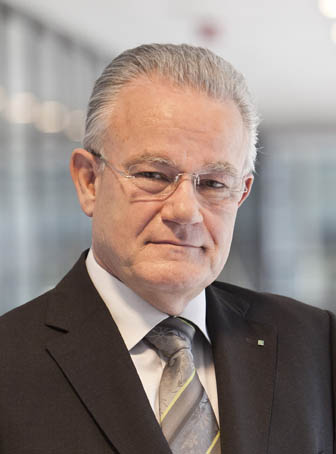 Dr. Hans-Joerg Bullinger was born in Stuttgart. He began
his career working as a manufacturer for the Daimler-Benz
company in Stuttgart, after which he obtained a degree
at the University of Stuttgart, graduating with a master's
degree and Ph.D. in manufacturing.
After two years of lecturing at the
University of Hagen, Dr. Bullinger
was asked to become a full-time
lecturer at the University of Stuttgart.
Besides his role as chairman
of the University, Dr. Bullinger was
also the head of the Institute for
Human Factors and Technology
Management (IAT) and the Fraunhofer-Institute
for Industrial Engineering
(IAO). From October 2002 until October 2012, he
was president of the Fraunhofer-Gesellschaft, Corporate
Management and Research, and alternated afterwards to
the Senate of Fraunhofer. Dr. Hans-Joerg Bullinger was born in Stuttgart. He began
his career working as a manufacturer for the Daimler-Benz
company in Stuttgart, after which he obtained a degree
at the University of Stuttgart, graduating with a master's
degree and Ph.D. in manufacturing.
After two years of lecturing at the
University of Hagen, Dr. Bullinger
was asked to become a full-time
lecturer at the University of Stuttgart.
Besides his role as chairman
of the University, Dr. Bullinger was
also the head of the Institute for
Human Factors and Technology
Management (IAT) and the Fraunhofer-Institute
for Industrial Engineering
(IAO). From October 2002 until October 2012, he
was president of the Fraunhofer-Gesellschaft, Corporate
Management and Research, and alternated afterwards to
the Senate of Fraunhofer.
Dr. Bullinger received several honorary doctorates and
awards such as the Knight Commander´s Cross of the Order
of Merit of the Federal Republic of Germany from the
Federal President of Germany; he was awarded "Manager
of the Year" by the German manager magazine in 2009;
and he was honored with the Grashof Denkmunze by VDI
(The Association of German Engineers) in 2011. Dr. Bullinger
received the Leonardo - European Corporate Learning
Award in 2012.
Dr. Bullinger is a member of several councils such as the
Industry-Science Research Alliance of the Federal Ministry
of Education and Research and the European Research
and Innovation Area Board (ERIAB) of the European
Commission. Dr. Bullinger is a Fellow of the UK´s Royal
Academy of Engineering.
At present, the Fraunhofer-Gesellschaft maintains more
than 80 research units in Germany, including 67 institutes
and research units. The majority of the 23,000 staff are qualified scientists and engineers. With its clearly
defined mission of application-oriented research and its
focus on key technologies of relevance to the future, the
Fraunhofer-Gesellschaft plays a prominent role in the
German and European innovation process.
Go Back
ROBERT A. BURGELMAN
Edmund W. Littlefield Professor of Management, Graduate School of Business, Stanford University, USA
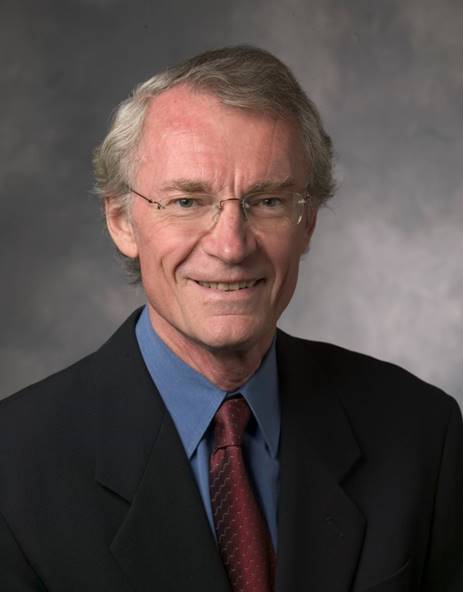 Dr. Robert A. Burgelman is the Edmund W. Littlefield
Professor of Management of the Stanford University
Graduate School of Business where he has taught since
1981. He obtained a Licenciate degree in Applied Economics
from Antwerp University (Belgium), and an MA
in Sociology and a Ph.D. in Management of Organizations from Columbia University, where he studied with
doctoral fellowships from the Ford Foundation (US) and
ICM (Belgium). His research has focused on the role of
strategy-making in firm evolution. In particular, he has
studied the strategy-making processes involved in how
companies enter into new businesses and exit from existing
ones to secure continued adaptation. In 2003 he
received an honorary doctorate from
the Copenhagen Business School for
his contributions to the study of corporate
innovation and entrepreneurship.
Dr. Burgelman has been on the
faculty of Antwerp University, New
York University, Harvard Business
School (as a Marvin Bower Fellow),
and Cambridge University (as a Visiting
Professor of Marketing Strategy
and Innovation at the Judge Business School). He has
been elected a Fellow of the Strategic Management Society
and a Fellow of the Academy of Management. Dr. Robert A. Burgelman is the Edmund W. Littlefield
Professor of Management of the Stanford University
Graduate School of Business where he has taught since
1981. He obtained a Licenciate degree in Applied Economics
from Antwerp University (Belgium), and an MA
in Sociology and a Ph.D. in Management of Organizations from Columbia University, where he studied with
doctoral fellowships from the Ford Foundation (US) and
ICM (Belgium). His research has focused on the role of
strategy-making in firm evolution. In particular, he has
studied the strategy-making processes involved in how
companies enter into new businesses and exit from existing
ones to secure continued adaptation. In 2003 he
received an honorary doctorate from
the Copenhagen Business School for
his contributions to the study of corporate
innovation and entrepreneurship.
Dr. Burgelman has been on the
faculty of Antwerp University, New
York University, Harvard Business
School (as a Marvin Bower Fellow),
and Cambridge University (as a Visiting
Professor of Marketing Strategy
and Innovation at the Judge Business School). He has
been elected a Fellow of the Strategic Management Society
and a Fellow of the Academy of Management.
He has published many articles in leading academic and
professional journals, as well as some 150 case studies
of companies and organizations in many different industries.
His books include Inside Corporate Innovation:
Strategy, Structure, and Managerial Skills (Free
Press, 1986), Research of Technological Innovation,
Management and Policy (JIA Press, Elsevier; Volume 4,
1989; Volume 5, 1993; Volume 6, 1997; and Volume 7,
2001), Strategy is Destiny: How Strategy-Making Shapes
a Company's Future (Free Press, 2002), Strategic Dynamics:
Concepts and Cases (McGraw-Hill, 2006), Strategic
Management of Technology and Innovation (5th edition,
McGraw-Hill-Irwin, 2009), and Becoming Hewlett Packard:
Why Strategic Leadership Matters (Oxford University
Press, forthcoming). Dr. Burgelman has served as an
Associate Editor of the Strategic Entrepreneurship Journal,
2007-2014. He has served as the Executive Director of
the Stanford Executive Program (SEP) during 1996-2015,
and has taught executive programs and led senior and top
management seminars for major companies worldwide.
He has also served on boards of directors and boards of
advisors of several private companies.
Go Back
CHUN-YEN CHANG
President, National Chiao Tung University-Taiwan
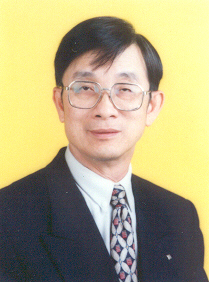 Dr. Chun-Yen Chang is the President of National Chiao Tung
University in Taiwan. He received his BSEE degree from the National Chenk Kung
University (NCKU), and MS and Ph.D. degrees from the National Chiao Tung
University (NCTU). Prior to his current position, he served as a research
fellow at Bell Labs, a professor at NCKU, the dean of research, dean of
engineering and dean of Electrical Engineering and Computer Science at NCTU.
He also was the founding Director of National Nano-Device Labs in Taiwan. Dr. Chun-Yen Chang is the President of National Chiao Tung
University in Taiwan. He received his BSEE degree from the National Chenk Kung
University (NCKU), and MS and Ph.D. degrees from the National Chiao Tung
University (NCTU). Prior to his current position, he served as a research
fellow at Bell Labs, a professor at NCKU, the dean of research, dean of
engineering and dean of Electrical Engineering and Computer Science at NCTU.
He also was the founding Director of National Nano-Device Labs in Taiwan.
In addition to his presidency at NCTU, Dr. Chang holds several other positions
and affiliations including Foreign Associate of the U.S. National Academy of
Engineering, member of Academia Sinica of the Republic of China, National
Chair Professor, National Policy Advisor to the Office of the President of the
Republic of China, and Science and Technology Advisor to the Executive Yuan of
the Republic of China.
Dr. Chang started his research on semiconductors in 1960, and established the
first Semiconductor Research Center in the R.O.C. in 1964. Later, he also
established the National Nano-Device Research Laboratory for leading-edge
research on nano devices.
His research in semiconductor devices and key inventions have made significant
contributions to the field. Among his major inventions are the method of low
pressure MOCVD using triethyl Gallium, Zn incorporation, boron penetration and
nitridation in silicon dioxide, and modulation doped-based transistor.
Dr. Chang has received 26 patents in the U.S. and in Taiwan and has published
over 300 papers. He is the author of the book Made by Taiwan, promoting the
idea of innovation and creativity for the future of Taiwan as a world leader
in technology.
Go Back
MORRIS CHANG
Founding Chairman, Taiwan Semiconductor Manufacturing Company Ltd. (TSMC)—Taiwan
Morris Chang has been the founding Chairman of
Taiwan Semiconductor Manufacturing Company Ltd. (TSMC) since 1987.
TSMC pioneered the “dedicated silicon foundry” industry and is the largest silicon
foundry in the world.
Prior to his career in Taiwan, Dr. Chang’s career was in the United States.
He was the President and Chief Operating Officer of General Instrument Corporation from
1984-1985, and prior to that, he was at Texas Instruments for 25 years (1958-1983),
where he was responsible for TI’s worldwide semiconductor business for six years.
Dr. Chang received his B. S. and M. S. degrees in Mechanical Engineering from the
Massachusetts Institute of Technology. in 1952 and 1953, and his Ph.D. in Electrical
Engineering from Stanford in 1964. He received honorary doctorates from Chiao-Tung
University, Ching-Hua University, and Central University in Taiwan, and the Polytechnic
University in the U.S.
Dr. Chang was selected by Fortune Magazine as Asia’s Power 25 in 2003; by Time
Magazine and CNN as Top 25 of the Most Influential CEOs in 2001; by Investor
Relations Magazine as the Best IR Officer in 2001. He was the recipient of the 2005
Nikkei Asia Prize, the IEEE Robert N. Noyce Award in 2000 for exceptional
contributions to the microelectronics industry, and the “Exemplary Leadership Award”
of the Fabless Semiconductor Association (FSA) in 1999. He was selected by Business Week
as one of the “Top 25 Managers of the year” and “Stars of Asia” in 1998; by
Common Wealth Magazine as one of “The Most Admired Entrepreneurs” since 1999, and by
BancAmerica Robertson Stephens as “One of The Most Significant Contributors in the 50
years of Semiconductor Industry” in 1998.
Dr. Chang is a member of MIT Corporation and the National Academy of Engineering (US);
he is on the advisory boards of NYSE, Stanford University, and University of California
at Berkeley.
Go Back
TAO-MING CHENG
President, Chaoyang University of Technology (CYUT), Taiwan
 Dr. Tao-ming Cheng currently is the President of Chaoyang University of Technology (CYUT), Taiwan, and a Professor at the Department of Construction Engineering. He received his Ph.D. in 1996 from the School of Civil Engineering, Purdue University, USA. His research interests include construction ergonomics, construction operations modeling and higher education management. Professor Cheng is the Arbitrator of the Republic of China (ROC). He serves as a Chairman of Accreditation in IEET and is a member of several committees such as Engineering Education Certification; TAC Accreditation; and Higher Education Accreditation and Supervision. Professor Cheng has published more than 100 research articles in indexed journals and conferences in the last decade. He mentors the International Journal of Applied Science and Technology (Scopus) and also reviews papers for several SCI journals.
Go Back
HENRY W. CHESBROUGH
Professor and Faculty Director, Garwood Center for Corporate Innovation, UC Berkeley-Haas School of Business, USA
 Dr. Henry Chesbrough is best known as "the father of Open Innovation". He is Professor and Faculty Director at Garwood Center for Corporate Innovation and teaches at the Haas School of Business at the University of California-Berkeley. He is also a professor of Information Systems at Esade Business School.
Dr. Chesbrough has written books such as Open Innovation (Harvard Business School Press, 2003), Open Business Models (Harvard Business School Press, 2006), and Open Services Innovation (Jossey-Bass, 2011). He has been recognized as one of the leading business thinkers by Thinkers50. He received an Innovation Luminary award from the European Commission and Intel in 2014. He also received the Industrial Research Institute Medal of Achievement in 2017 and has two honorary doctorates.
Go Back
YOUNGRAK CHOI
Chairman, Korea Research Council of Public Science & Technology (KORP)-South Korea
Dr. Youngrak Choi is Chairman of the Korea
Research Council of Public Science & Technology (KORP). From 2002-2005 he was
the president of STEPI (Science & Technology Policy Institute) in South Korea.
He was the president of the Korean Society for Technology Management and Economics
(KOSTME) from 2002-2003, and from 1999-200 he was the Vice President of STEPI.
From 1997-1998 he was the head of the Dept. of Policy and Planning at the Korea
Institute of Science and Technology (KIST). Dr. Choi received a B.S. in Forestry
from Seoul National University; an M.A. in Public Administration from Seoul National
University; and a Ph.D. in Public Administration from Roskilde University in Denmark.
He is the President of the Korean Society for Technology Management & Economics and a
member of the Presidential Advisory Council for Science & Technology.
Go Back
Richard
M. Cyert
Professor of Management and Economics
Carnegie Mellon University-USA
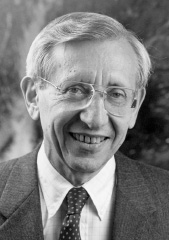 Richard M. Cyert became
Carnegie Mellon University's (CMU) sixth president in 1972 and retired from
this presidency in June 1990. He then became president of the Carnegie-Bosch
Institute to study and improve international management. Richard M. Cyert became
Carnegie Mellon University's (CMU) sixth president in 1972 and retired from
this presidency in June 1990. He then became president of the Carnegie-Bosch
Institute to study and improve international management.
Through his leadership, CMU became financially solvent, strengthened its
educational programs and significantly expanded its research and enhanced
its reputation as one of the nation's leading educational and research
institutions. After three years as President, he was described by the New
York Times as "the archetype of the new breed of leaders in American
universities...an economist and management theorist"
A director and consultant for numerous businesses, state and federal
governments, and nonprofit associations, he was head of a statewide group
selected to review Pennsylvania's tax laws and was honored frequently for
his leadership role in the economic revitalization of western Pennsylvania.
He joined the CMU faculty as an instructor of economics in 1948; rose
through the ranks to professor of economics and industrial administration;
and was appointed Dean of the Business School in 1962. Under his direction,
the "management game" for business education was developed and expanded. It
is now a model for other schools and used extensively throughout the USA,
Europe and Middle East. He was appointed the University's president after 10
years as Dean of CMU’s Graduate School of Industrial Administration.
Dr. Cyert received a B.S. from the University of Minnesota in 1943 before
joining the U.S. Navy during World War II. He did his graduate work in
economics at Columbia University following the War, but while he was there
he studied statistics with many of the best statisticians who were on the
faculty at the time, and thus became a specialist in statistics as well as
economics. When he came to the then Carnegie Institute of Technology in
1948, it was to teach statistics in accounting and auditing. Cyert pioneered
the application of statistical methods in this area and in addition to
several research articles on the topic, he co-authored books with R.M.
Trueblood (1957) and H.J. Davidson (1962) on the topic. He was elected as a
fellow of the American Statistical Association in 1973, largely for this
work.
Dr. Cyert was a consultant in economics and management science in Belgium,
Germany and Australia. He received honorary doctorates from the University
of Gothenburg, Sweden, the University of Leuven, Belgium, and from several
colleges in the USA.
In 1990 Dr. Cyert was elected and inducted into the World Level of the Hall
of Fame for Engineering, Science and Technology. He was the author or
co-author of 12 books and wrote more than 100 articles for professional
journals and books. He died on October 7, 1998, at the age of 77.
Go Back
Gideon
de Wet
Professor Emeritus, University of Pretoria - South Africa
 Dr Gideon de Wet’s formal
academic qualifications are the
degrees BSc B.Eng (Electron) and
PhD Eng., awarded by the
University Stellenbosch in South
Africa. Post-graduate studies
include the Diploma in Digital
Electronics, Philips International Institute for
Technological Studies, Eindhoven, Netherlands;
Advanced Course in Control Engineering, University of
Cambridge, UK; Advanced Executive Programme,
University of South Africa; MOT Summer School, MIT,
Cambridge, Massachusetts, USA. He has published a
number of professional papers and presented papers at
several international conferences. Dr Gideon de Wet’s formal
academic qualifications are the
degrees BSc B.Eng (Electron) and
PhD Eng., awarded by the
University Stellenbosch in South
Africa. Post-graduate studies
include the Diploma in Digital
Electronics, Philips International Institute for
Technological Studies, Eindhoven, Netherlands;
Advanced Course in Control Engineering, University of
Cambridge, UK; Advanced Executive Programme,
University of South Africa; MOT Summer School, MIT,
Cambridge, Massachusetts, USA. He has published a
number of professional papers and presented papers at
several international conferences.
He has been involved in the management of technology
for many years. He was the founder manager of the
Institute for Maritime Technology (IMT) in Simon’s
Town. As General Manager: Research at Armscor, he
played a significant part in the creation and operation of
the technology development and management system of
the defense community during the 1980s. He was the
first incumbent of the Chair for Engineering Management
at the University of Pretoria, where he taught
management of technology and entrepreneurship at postgraduate
level for more than 10 years. As a director of
LGI and Technotron Pty Ltd., he participated in the
establishment of a number of high-tech ventures. He
was also the first Director: Intellectual Capital of
DataFusion (Pty) Ltd. He has served on the boards of
directors of several high-tech companies, several times as
chairperson.
He started the Policy Studies Unit at CSIR, and
expanded his field of interest to the level of the national
innovation system and science and technology policy.
This included participation in activities in countries like
Chile, Mauritius and New Zealand and consultation for
the United Nations’ Economic Commission for Africa.
Although he is officially retired, he still undertakes
consulting work and teaching. He was invited to teach
at the University of Canterbury in Christchurch as
Visiting Erskine Fellow on two occasions, the most
recent being August to December 2006.
Go Back
KATHLEEN EISENHARDT
W. Ascherman Professor, Stanford University, and Co-Director
of the Stanford Technology Ventures Program,
Stanford University, USA
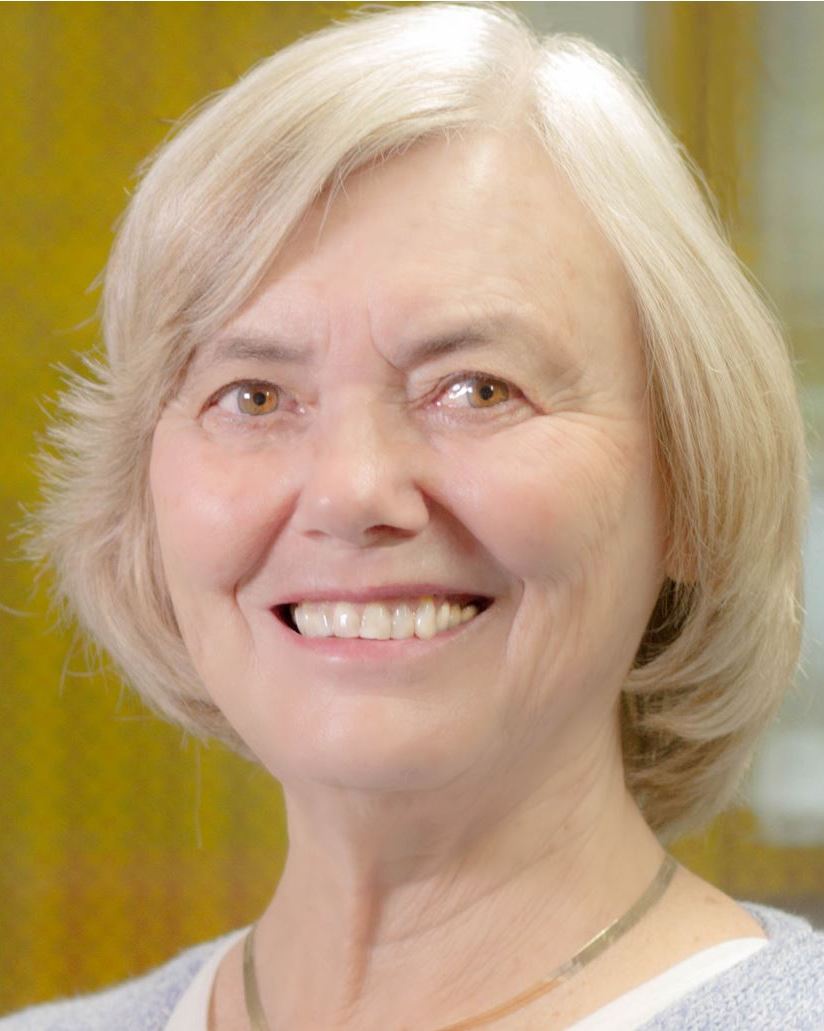 Dr. Kathleen M. Eisenhardt is the
Stanford W. Ascherman Professor of
Strategy and Organization at Stanford
University and co-director of
the Stanford Technology Ventures
Program. Her recent best-selling book
(with Don Sull) is Strategy as Simple
Rules, named a ’top 10 summer read’
by the Wall Street Journal. Dr. Eisenhardt’s
research sits at the nexus of
strategy and organization theory where she focuses on
high-velocity markets and technology-based firms. She
is now studying strategy in distinct economic ’games’
and strategy as simple rules, particularly using multi-case
methods. Her PhD is from Stanford’s Graduate School of
Business. Dr. Kathleen M. Eisenhardt is the
Stanford W. Ascherman Professor of
Strategy and Organization at Stanford
University and co-director of
the Stanford Technology Ventures
Program. Her recent best-selling book
(with Don Sull) is Strategy as Simple
Rules, named a ’top 10 summer read’
by the Wall Street Journal. Dr. Eisenhardt’s
research sits at the nexus of
strategy and organization theory where she focuses on
high-velocity markets and technology-based firms. She
is now studying strategy in distinct economic ’games’
and strategy as simple rules, particularly using multi-case
methods. Her PhD is from Stanford’s Graduate School of
Business.
Go Back
CARLETON S. (CARLY) FIORINA
Chairman and Chief Executive Officer
Hewlett-Packard Company-USA
 Carleton
S. (Carly) Fiorina is chairman and chief executive officer of
Hewlett-Packard Company. HP is a leading global provider of computing and
imaging solutions and services and is focused on making technology and its
benefits accessible to all. Carleton
S. (Carly) Fiorina is chairman and chief executive officer of
Hewlett-Packard Company. HP is a leading global provider of computing and
imaging solutions and services and is focused on making technology and its
benefits accessible to all.
Since joining HP in July 1999, Fiorina has led HP’s reinvention as a
company that makes the Internet work for businesses and consumers. Under
her leadership, HP has returned to its roots of innovation and
inventiveness and is focused on delivering the best total customer
experience.
Prior to joining HP, Fiorina spent nearly 20 years at AT&T and Lucent
Technologies, where she held a number of senior leadership positions in
sales and marketing. As president of Lucent’s Global Service Provider
Business, she expanded the company’s international business and
spearheaded the planning and execution of its initial public offering and
subsequent spin-off from AT&T.
Fiorina holds a bachelor’s degree in medieval history and philosophy from
Stanford University; a master’s degree in business administration from the
Robert H. Smith School of Business at the University of Maryland at
College Park, Md.; and a master’s of science degree from MIT’s Sloan
School. Go Back
Andrew S. Grove
Chairman of the Board
INTEL CORPORATION-USA
 Andrew S. Grove was named
Chairman of the Board of Intel Corporation in May 1997. From 1987 to 1998 he
served as the company's CEO, and from 1979 to 1997 he served as President.
Prior to participating in the founding of Intel in 1968 with Robert Noyce
and Gordon Moore, he worked as the Assistant Director of Research and
Development for Fairchild Semiconductor. Andrew S. Grove was named
Chairman of the Board of Intel Corporation in May 1997. From 1987 to 1998 he
served as the company's CEO, and from 1979 to 1997 he served as President.
Prior to participating in the founding of Intel in 1968 with Robert Noyce
and Gordon Moore, he worked as the Assistant Director of Research and
Development for Fairchild Semiconductor.
Andrew S. Grove was born in Budapest,
Hungary in 1936. He graduated from the City College of New York in 1960 with
a Bachelor of Chemical Engineering degree and received his Ph.D. from the
University of California, Berkeley in 1963. Upon graduation, he joined the
Research and Development Laboratory of Fairchild Semiconductor and became
Assistant Director of Research and Development in 1967.
Dr. Grove has written over 40 technical
papers and holds several patents on semiconductor devices and technology.
For six years he taught a graduate course in semiconductor device physics at
the University of California, Berkeley. He currently is a lecturer at the
Stanford University Graduate School of Business, teaching a course entitled
"Strategy and Action in the Information Processing Industry."
Dr. Grove has received many honorary
academic degrees, including an honorary Doctor of Science degree from the
City College of New York (1985), an honorary Doctor of Engineering degree
from Worcester Polytechnic Institute (1989) and an honorary Doctor of Laws
degree from Harvard University (2000).
His first book, Physics and Technology of
Semiconductor Devices (John Wiley and Sons, Inc., 1967), has been used at
many leading universities in the United States. His book High Output
Management (Random House, 1983 and Vintage, 1985) has been translated into
eleven languages, and has recently been updated and reissued by Vintage
Books. His book titled One-on-One With Andy Grove, was published by G.P.
Putnam's Sons in June, 1987 and Penguin in 1989. His book Only the Paranoid
Survive was published by Doubleday in 1996. His latest book, Swimming
Across, was published in November, 2001 by Time Warner Books. An author of
articles in Fortune, The Wall Street Journal, and the New York Times, he has
written a weekly column on management which was carried by several
newspapers, and a column on management for Working Woman magazine.
Dr. Grove has been elected a Fellow of the
IEEE and a member of the National Academy of Engineering. He is the
recipient of many industry awards, including the IEEE Engineering Leadership
Recognition award (1987), and the AEA Medal of Achievement award (1993). In
1997 he received the "Technology Leader of the Year" award from Industry
Week, the "CEO of the Year" award from CEO magazine, and "Man of the Year"
award from Time magazine. In 1998 Dr. Grove was named "Distinguished
Executive of the Year" by the Academy of Management, and received the IEEE
2000 Medal of Honor award. In 2001, he was named as the recipient of the
Lifetime Achievement Award from the Strategic Management Society.
Go Back
BACHARUDDIN JUSUF HABIBIE
Former President, Indonesia; Founder and Chairman, The Habibie Center—Indonesia
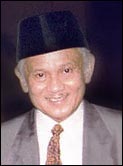
Prof. Dr.-Ing. Dr. Sc. h.c. Bacharuddin Jusuf Habibie
was born in 1936 in Pare-pare (South Sulawesi) Indonesia. On March 11, 1998, the
People’s Consultative Assembly (MPR) elected and installed B. J. Habibie as
the seventh Vice President of the Republic of Indonesia. On May 21, l998,
he took the oath of office as third President of The Republic of Indonesia.
Under his leadership, Indonesia succeeded not only in conducting the first free and fair
General Elections in 1999 but also succeeded in bringing about significant changes towards
democratizing and reforming Indonesia.
In 1955 B.J.Habibie studied at the Technische Hochscule, Aachen, Germany. In 1960 he earned his
Diplom-Ingenieur with cum laude at the Department of Aircraft Design and Construction,
and earned his Doctor Ingenieur with summa cum laude at the same institution
in 1965. He started his career in Germany by becoming the Head of Research and Development
of Structure Analysis in the Hamburger Flugzeugbau Gmbh, Hamburg, Germany (1965 - 1969);
Vice President and Technology Director MBB Gmbh, Hamburg and Munchen (1973 - 1978),
and Technology Senior Advisor to the MBB Board of Directors (1978).
In 1978 he was appointed Minister of State for Research and Technology and, concurrently,
head of the Agency for the Assessment and Application of Technology (BPPT).
He maintained this job for five terms of office during Development Cabinet, until 1998. He
was appointed as Chairman of the Indonesian Moslem Intellectuals Association (ICMI) in 1990.
He is president of the Islamic International Forum for Science, Technology and Human
Resources Development (IIFTIHAR) since 1997; founder and Chairman of the
Board of Trustees of The Habibie Center (THC) since 1999. In 2001, he became a member
of the Board of Founders of the Muslim World League (Rabithah ‘Alam Islami) and in 2000
he became a member of InterAction Council (IAC) since 2000. B.J Habibie has 17 National
and 16 International medals and decorations.
Go Back
GUNNAR HAMBREAUS
Member, Swedish Royal Academy of Science; Former President and Chairman, Royal Swedish Academy of Engineering Sciences—Sweden
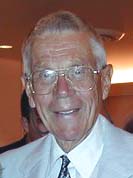 Dr.
Gunnar Hambreaus was born in 1919. He received his MSc. from Uppsala
University, M.Eng. S from Royal Institute of Technology in Stockholm and
Dr.Eng.S, hon. from Chalmers Technical University in Gothenburg. He served
as secretary in the Swedish Technical Research Council from 1946 to 1953, as
editor in chief of the leading technical periodical in Sweden (Teknisk
Tidskrift) from 1953 to 1970, as the president of Swedish Technical Press AB
and finally as the president and chairman of the Royal Swedish Academy of
Engineering Sciences from 1971 to 1985. He worked for Swedish industry as a
member and in some cases chairman in the Board of Directors of some 20
leading Swedish companies e.g Volvo, Bofors, Pharmacia, Hasselblad and
others. Presently Dr. Hambreaus chairs the Scandinavia-Japan Sasakawa
Foundation and the Sweden-Algeria Mixed Commission as well as several Price
Juries. As a member of the Swedish Royal Academy of Science he takes part in
the election of Nobel Laureates in Physics, Chemistry and Economics. He is a
member of many learned societies and academies inside and outside Sweden. He
is proud to carry decorations from the Swedish King and his Parliament as
well as orders from Sweden, France, Germany, Japan, Spain and Australia. Dr.
Gunnar Hambreaus was born in 1919. He received his MSc. from Uppsala
University, M.Eng. S from Royal Institute of Technology in Stockholm and
Dr.Eng.S, hon. from Chalmers Technical University in Gothenburg. He served
as secretary in the Swedish Technical Research Council from 1946 to 1953, as
editor in chief of the leading technical periodical in Sweden (Teknisk
Tidskrift) from 1953 to 1970, as the president of Swedish Technical Press AB
and finally as the president and chairman of the Royal Swedish Academy of
Engineering Sciences from 1971 to 1985. He worked for Swedish industry as a
member and in some cases chairman in the Board of Directors of some 20
leading Swedish companies e.g Volvo, Bofors, Pharmacia, Hasselblad and
others. Presently Dr. Hambreaus chairs the Scandinavia-Japan Sasakawa
Foundation and the Sweden-Algeria Mixed Commission as well as several Price
Juries. As a member of the Swedish Royal Academy of Science he takes part in
the election of Nobel Laureates in Physics, Chemistry and Economics. He is a
member of many learned societies and academies inside and outside Sweden. He
is proud to carry decorations from the Swedish King and his Parliament as
well as orders from Sweden, France, Germany, Japan, Spain and Australia.
Go Back
SHINJIRO IWATA
Advisor to Hitachi Ltd., Japan
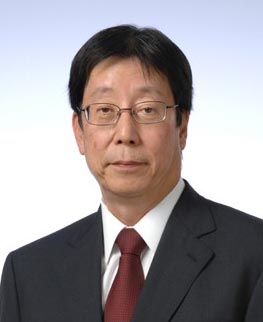 Mr. Shinjiro Iwata Advisor to Hitachi Ltd. He retired in April after serving as the Representative Executive Officer, Executive Vice President, Executive Officer, and Chief Transformation Officer.
Mr. Iwata began his career with Hitachi Ltd. in 1972, when he joined the Overseas Business Department. Working his way up through various positions, in 1996 he became manager of Business Planning Department for the Information Systems Group.
He joined Hitachi Data Systems (HDS) in 1997 as Executive Vice President. After improving the performance of HDS, he became CEO of the company in 2001.
In 2006 he became CMO of the newly established Hitachi Global Storage Technologies, where he oversaw everything from manufacturing to front-line sales. Later acting as EVP, he implemented sweeping management reforms, putting HGST's business firmly back on track.
In 2009, he returned to Hitachi Ltd. as Vice President and Executive Officer, CEO of Service & Global Business, Information & Telecommunication Systems. In the following years, Mr. Iwata strengthened the overseas divisions of ICT, later becoming Senior Vice President, and further contributing to the expansion of business.
In 2013 he became Representative Executive Officer, and worked on management reform of the entire Hitachi Group. Mr. Iwata's firmly believes in nimble management making use of data, and efficient waste-free management.
In order to implement this policy, Mr. Iwata also acted as CIO for integration of Hitachi's internal ICT systems and a leader of the End-to-End Supply Chain Project. Most recently, Mr. Iwata served as Director of the Hitachi Smart Transformation Project Initiatives Division, which is reforming the structures of the entire Hitachi Group.
Since 2012, he has also been a visiting professor at Tsukuba University. Mr. Shinjiro Iwata Advisor to Hitachi Ltd. He retired in April after serving as the Representative Executive Officer, Executive Vice President, Executive Officer, and Chief Transformation Officer.
Mr. Iwata began his career with Hitachi Ltd. in 1972, when he joined the Overseas Business Department. Working his way up through various positions, in 1996 he became manager of Business Planning Department for the Information Systems Group.
He joined Hitachi Data Systems (HDS) in 1997 as Executive Vice President. After improving the performance of HDS, he became CEO of the company in 2001.
In 2006 he became CMO of the newly established Hitachi Global Storage Technologies, where he oversaw everything from manufacturing to front-line sales. Later acting as EVP, he implemented sweeping management reforms, putting HGST's business firmly back on track.
In 2009, he returned to Hitachi Ltd. as Vice President and Executive Officer, CEO of Service & Global Business, Information & Telecommunication Systems. In the following years, Mr. Iwata strengthened the overseas divisions of ICT, later becoming Senior Vice President, and further contributing to the expansion of business.
In 2013 he became Representative Executive Officer, and worked on management reform of the entire Hitachi Group. Mr. Iwata's firmly believes in nimble management making use of data, and efficient waste-free management.
In order to implement this policy, Mr. Iwata also acted as CIO for integration of Hitachi's internal ICT systems and a leader of the End-to-End Supply Chain Project. Most recently, Mr. Iwata served as Director of the Hitachi Smart Transformation Project Initiatives Division, which is reforming the structures of the entire Hitachi Group.
Since 2012, he has also been a visiting professor at Tsukuba University.
Go Back
MICHAEL JOSEPH
Director of Mobile Money, Vodafone Group Services Limited, UK; and Fellow, the World Bank
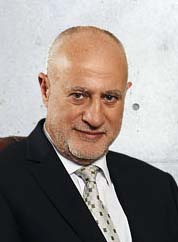 Michael Joseph is employed by Vodafone Group Services
Limited as the director of Mobile
Money and is responsible for leading
the strategic growth and development
of the successful M-Pesa
proposition. Michael is also Vodafone's
Strategic Advisor appointed
to the Boards of Vodacom Group
South Africa, Vodacom Tanzania,
Vodacom Mozambique and Safaricom
Limited. He was appointed
in March 2011 as the first World Bank Fellow to advise
governments, regulators and other institutions on Mobile
Money and other ICT initiatives. Previously, Michael
was the CEO of Safaricom Limited, steering the company
from a subscriber base of less than 20,000 to over 16.71
million subscribers at his retirement in November 2010.
This phenomenal growth straddling nearly a decade was
motored by the launch of many innovative products and
services such as M-PESA. He has extensive international
experience in company start-ups and the implementation and operation of large wireless and wire-line networks. Michael Joseph is employed by Vodafone Group Services
Limited as the director of Mobile
Money and is responsible for leading
the strategic growth and development
of the successful M-Pesa
proposition. Michael is also Vodafone's
Strategic Advisor appointed
to the Boards of Vodacom Group
South Africa, Vodacom Tanzania,
Vodacom Mozambique and Safaricom
Limited. He was appointed
in March 2011 as the first World Bank Fellow to advise
governments, regulators and other institutions on Mobile
Money and other ICT initiatives. Previously, Michael
was the CEO of Safaricom Limited, steering the company
from a subscriber base of less than 20,000 to over 16.71
million subscribers at his retirement in November 2010.
This phenomenal growth straddling nearly a decade was
motored by the launch of many innovative products and
services such as M-PESA. He has extensive international
experience in company start-ups and the implementation and operation of large wireless and wire-line networks.
Go Back
HAROLD A. LINSTONE
Editor-in-chief, Technological Forecasting and Social Change; University Professor Emeritus, Systems Science, Portland State University, USA
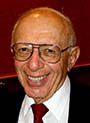 Dr. Harold A. Linstone earned his M.A. and Ph.D. degrees in Mathematics from Columbia University and the University of Southern California, respectively. He now holds the rank of University Professor Emeritus of Systems Science at Portland State University, Portland, Oregon, USA. From 1970 to 1977 he served as director of its Systems Science Ph.D. Program. His 22 years of industrial experience include positions at Hughes Aircraft Company and Lockheed Corporation, where he was Associate Director of Corporate Planning—Systems Analysis. He has been a visiting professor at the University of Rome, the University of Washington, and Kiel University. In 1993-94 he served as president of the International Society for the Systems Sciences, and in 2003 he won the World Future Society’s Distinguished Service Award. Dr. Harold A. Linstone earned his M.A. and Ph.D. degrees in Mathematics from Columbia University and the University of Southern California, respectively. He now holds the rank of University Professor Emeritus of Systems Science at Portland State University, Portland, Oregon, USA. From 1970 to 1977 he served as director of its Systems Science Ph.D. Program. His 22 years of industrial experience include positions at Hughes Aircraft Company and Lockheed Corporation, where he was Associate Director of Corporate Planning—Systems Analysis. He has been a visiting professor at the University of Rome, the University of Washington, and Kiel University. In 1993-94 he served as president of the International Society for the Systems Sciences, and in 2003 he won the World Future Society’s Distinguished Service Award.
Dr. Linstone is editor-in-chief of the professional journal Technological Forecasting and Social Change, which he founded in 1969, and which is now in its 38th year. He is author or co-author of the books The Delphi Method (1975), Futures Research: New Directions (1976), Technological Substitution (1977), Multiple Perspectives for Decision Making (1984), The Unbounded Mind (1993), The Challenge of the 21st Century (1994), and Decision Making for Technology Executives (1999).
Go Back
JOHN R. MCDOUGALL
President of National Research Council, Canada
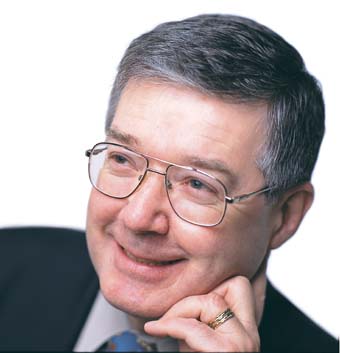 Mr. John R. McDougall President of National Research Council, Canada Mr. John McDougall, born and raised in Edmonton, Canada, was appointed as NRC's President in April 2010 following 12 years as President and CEO of the Alberta Research Council when he also founded and chaired Innoventures Canada, bringing together Canada's leading research and technology organizations. His career began as a petroleum engineer, and then quickly evolved into the ownership and management of an international engineering consulting firm and subsequently a private merchant bank. From 1991 to 1997, he was the first Poole Chair in Management for Engineers, a leadership position within the University of Alberta. He has held leadership positions with some of Canada's most innovative research and manufacturing businesses, research consortia and not-for-profit organizations and with numerous professional and business organizations. He has served on advisory boards and committees at provincial, federal and international levels. Mr. McDougall has been recognized by organizations including the Canadian Academy of Engineers, Engineers Canada, Mexican College of Civil Engineers and PICMET. He has a B.Sc. in Civil Engineering from the University of Alberta, and completed several postgraduate courses in Environmental Engineering. Mr. John R. McDougall President of National Research Council, Canada Mr. John McDougall, born and raised in Edmonton, Canada, was appointed as NRC's President in April 2010 following 12 years as President and CEO of the Alberta Research Council when he also founded and chaired Innoventures Canada, bringing together Canada's leading research and technology organizations. His career began as a petroleum engineer, and then quickly evolved into the ownership and management of an international engineering consulting firm and subsequently a private merchant bank. From 1991 to 1997, he was the first Poole Chair in Management for Engineers, a leadership position within the University of Alberta. He has held leadership positions with some of Canada's most innovative research and manufacturing businesses, research consortia and not-for-profit organizations and with numerous professional and business organizations. He has served on advisory boards and committees at provincial, federal and international levels. Mr. McDougall has been recognized by organizations including the Canadian Academy of Engineers, Engineers Canada, Mexican College of Civil Engineers and PICMET. He has a B.Sc. in Civil Engineering from the University of Alberta, and completed several postgraduate courses in Environmental Engineering.
Go Back
THOMAS L. MAGNANTI
President, Singapore University of Technology and Design (SUTD), Singapore; and Institute Professor and former Dean of Engineering, Massachusetts Institute of Technology (MIT), USA
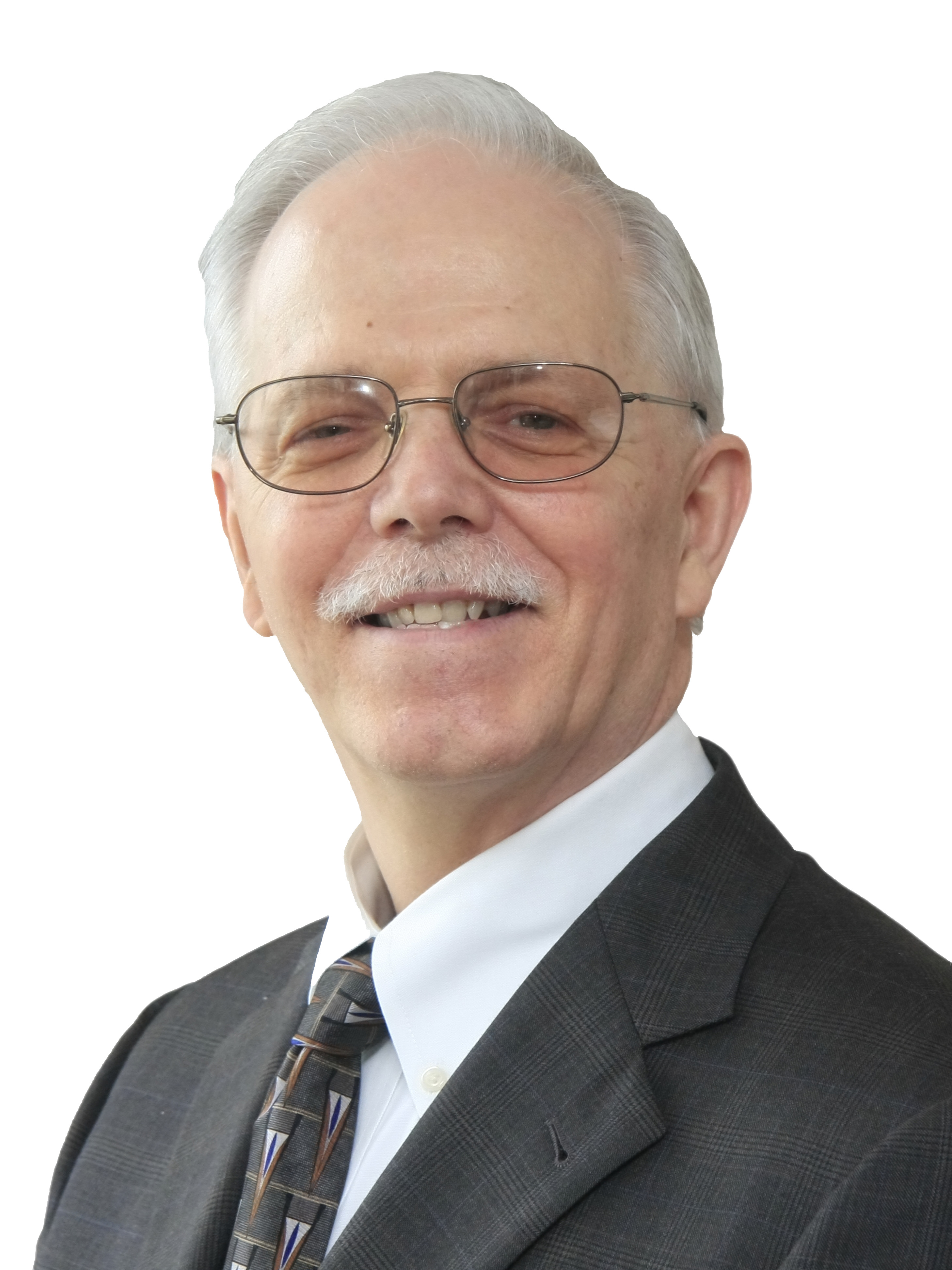 Thomas Magnanti is the founding President of the Singapore
University of Technology and
Design (SUTD), and Institute Professor
and former Dean of Engineering
at MIT. He has devoted much
of his professional career to education
that combines engineering and
management, and to teaching and
research in applied and theoretical
aspects of large-scale optimization.
Professor Magnanti has a long association with programs
in technology and in the management of technology. Thomas Magnanti is the founding President of the Singapore
University of Technology and
Design (SUTD), and Institute Professor
and former Dean of Engineering
at MIT. He has devoted much
of his professional career to education
that combines engineering and
management, and to teaching and
research in applied and theoretical
aspects of large-scale optimization.
Professor Magnanti has a long association with programs
in technology and in the management of technology.
At SUTD, he has led the development of a university
whose mission is to advance knowledge and nurture technically
grounded leaders and innovators to serve societal
needs through a focus on design and an integrated multidisciplinary
curriculum and multi-disciplinary research.
At MIT he was the founding co-director of MIT's Leaders
for Manufacturing and System Design and Management
Programs, and founding director of the Singapore-MIT Alliance
for Research and Technology (SMART). As Dean,
he was instrumental in creating the Deshpande Center for Technological Innovation and was a strong advocate and
supporter of programs in entrepreneurship such as the
MIT 100K competition. He also headed one third of the
Sloan School of Management for several years.
He has served as president of three major professional societies
and as editor of the journal Operations Research.
He has also served on a number of university, corporate
and government boards and councils.
Professor Magnanti has received numerous educational
and research awards including four honorary degrees. He
is a member of the U.S. National Academy of Engineering
and the American Academy of Arts and Sciences. He has
an undergraduate degree in Chemical Engineering from
Syracuse University, and masters' degrees in Statistics
and in Mathematics as well as a Ph.D. in Operations Research,
all from Stanford University.
Go Back
MODESTO A. MAIDIQUE
President, Florida International University-USA
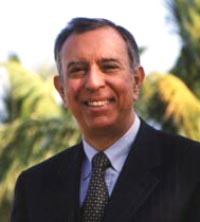 Modesto
A. Maidique is the 4th president of Florida International University (FIU),
a member of the State University System of Florida and the fastest growing
research university in the United States. The university, known for its
strong engineering and business programs, offers more than 200 degree
programs from the baccalaureate to the doctoral level and has been cited
seven times in U.S. News & World Report's annual ranking of “America's
Best Colleges.” Modesto
A. Maidique is the 4th president of Florida International University (FIU),
a member of the State University System of Florida and the fastest growing
research university in the United States. The university, known for its
strong engineering and business programs, offers more than 200 degree
programs from the baccalaureate to the doctoral level and has been cited
seven times in U.S. News & World Report's annual ranking of “America's
Best Colleges.”
During his tenure at FIU, Dr. Maidique has presided over the establishment
of the Schools of Architecture and Law, initiated the football program,
and doubled enrollment to over 32,000 students today. In addition,
sponsored research has increased more than seven-fold to $58.8 million,
while endowment quintupled. In the year 2000, the university achieved the
highest research rank given by the Carnegie Foundation for the Advancement
of Teaching, and was granted the third Phi Beta Kappa chapter for a public
university in Florida.
A graduate of the Department of Electrical Engineering and Computer
Science at the Massachusetts Institute of Technology (Ph.D.) and the
Harvard Business School (PMD) program, Dr. Maidique has taught at both of
his alma maters and at Stanford University. He is a world renowned
authority on the management of high technology enterprises. For more than
two decades -- for institutions including the White House, Harvard and IBM
-- Dr. Maidique has provided counsel on critical management and
educational issues impacting our nation.
Throughout his career in both the corporate and academic worlds, Dr.
Maidique has been involved with high technology firms in a variety of
capacities: as an executive in established and entrepreneurial high
technology firms; as a consultant, lecturer, and director for
multinational high technology giants; and as professor and lecturer at
leading universities in the U.S. and abroad.
In 1970, Dr. Maidique co-founded a semiconductor company now accounts for
most of the sales of Analog Devices, Inc. (ADI), a $1.2 billion
manufacturer of integrated circuits. He also served as president and CEO
of Genome Therapeutics, a genetic engineering company, and as a general
partner of Hambrecht & Quist, a venture capital firm. He has consulted and
lectured for major American firms including IBM, Rockwell International,
Honeywell, and Texas Instruments.
Dr. Maidique is the author of numerous articles in academic journals, a
contributing author to ten books, and a co-author of Strategic Management
of Technology and Innovation, a textbook now in its third edition, which
is used at more than 100 colleges and universities. An article he
co-authored, “The Art of HighTechnology Management,” is one of the best
selling articles published in the Sloan Management Review. He is also the
co-author of Energy Future, a New York Times best seller on energy policy.
In 1989, former President George H. W. Bush appointed Dr. Maidique to the
President's Educational Policy Advisory Committee. He also serves on the
boards of National Semiconductor and Carnival Corporation, is Vice
Chairman of the Miami Business Forum, and is past chairman of The Beacon
Council, Miami's economic development authority. In 2000, President-elect
George W. Bush appointed Dr. Maidique to the President’s Education
Advisory Committee.
Go Back
MANDY J. MOCK
VP Information Technology Group (former), Intel Corporation, USA
 Ms. Mandy J. Mock is the vice president in the Information Technology group and served as the general manager of product engineering solutions at Intel Corporation.
She leads the product engineering solutions IT team, which provides Intel's product development teams with innovative IT solutions and support for greater efficiency and faster
design and production cycles. Ms. Mock has held leadership positions in Intel's IT group since 2010, capping a two-decade career at the company. Before assuming her current role in
2016, she spent two years as director of financial information systems, leading the team charged with providing IT solutions for Intel's Finance organization. She joined the IT group
as director of flex services, a business unit that provides burst capacity resources for software development to Intel's product teams. She joined Intel in 1995 after receiving her bachelor's
degree in electrical and computer engineering and French from Carnegie Mellon University. She went on to earn a master's degree in computer science from the Oregon Graduate
Institute of Science and Technology and her MBA degree from the Kenan-Flagler Business School at the University of North Carolina at Chapel Hill.
Ms. Mandy J. Mock is the vice president in the Information Technology group and served as the general manager of product engineering solutions at Intel Corporation.
She leads the product engineering solutions IT team, which provides Intel's product development teams with innovative IT solutions and support for greater efficiency and faster
design and production cycles. Ms. Mock has held leadership positions in Intel's IT group since 2010, capping a two-decade career at the company. Before assuming her current role in
2016, she spent two years as director of financial information systems, leading the team charged with providing IT solutions for Intel's Finance organization. She joined the IT group
as director of flex services, a business unit that provides burst capacity resources for software development to Intel's product teams. She joined Intel in 1995 after receiving her bachelor's
degree in electrical and computer engineering and French from Carnegie Mellon University. She went on to earn a master's degree in computer science from the Oregon Graduate
Institute of Science and Technology and her MBA degree from the Kenan-Flagler Business School at the University of North Carolina at Chapel Hill.
Go Back
ROBERT JT MORRIS
VP Global Labs, IBM Research, USA
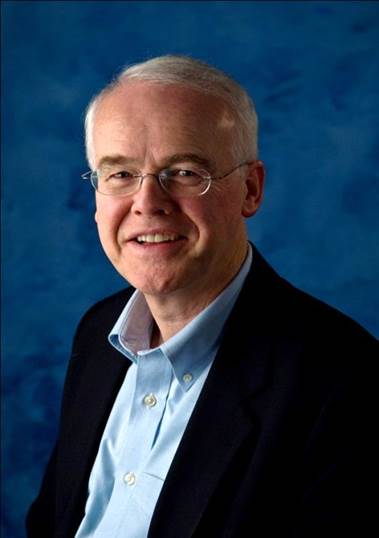
Dr. Robert JT Morris is Vice President,
Global Labs, IBM Research,
where he is responsible for IBM Research
Laboratories in China, India,
Japan, Brazil, Australia and Africa.
He leads these labs from the IBM
Growth Market headquarters in
Shanghai. From 2006-2011 he led
Services Research across IBM from
the TJ Watson Research Center in
New York, and from 2004-2006 he led the transformation
of IBM's services business to become technology-asset or
IP-based.
From 1999-2004, he was the director of the IBM Almaden
Research Center, a hub of applied research in computer,
physical and behavioral sciences. Dr. Morris was also
concurrently vice president for Personal Systems and
Storage Research at IBM. During this period the field
of "services science" was initiated by IBM Research and
developed working closely with university, industry and
government partners. Earlier, he was a director at the IBM
TJ Watson Research lab in New York, where he led teams
in systems research. Originally from Australia, he began
his career at Bell Laboratories where he was involved in
developing a number of networking and computing technologies.
Dr. Morris was chairman of the Bay Area Science and
Innovation Consortium (BASIC) from 2002-2005, an organization
consisting of the heads of major research institutions
in Silicon Valley and the San Francisco Bay Area.
He has been a member of the National Academies' Government
University Industry Research Roundtable, an
Editor of IEEE Transactions on Computers, he has published
more than 50 articles on computer science, electrical
engineering, and mathematics, and he has received 11
patents. He is a member of the IBM Academy of Technology,
a Fellow of the IEEE, and is on a number of advisory
boards for leading universities and governments labs.
Go Back
TSUNEO NAKAHARA
Adviser to CEO (past Vice Chairman) of Sumitomo Electric Industries, Ltd.-Japan
Since joining Sumitomo Electric Industries, Ltd., in 1953,
Dr. Tsuneo Nakahara has been a major force in the conception, design and manufacturing of optical
fiber and cables. Under his guidance, the company developed the vapor phase axial deposition optical
fiber manufacturing technology, which has become the standard in Japan and is one of the top three
fiber manufacturing processes worldwide. His team also designed extremely low-Ioss optical fiber
with pure silica as the core and fluorine in the clad. This technology was widely used for undersea
long-distance cables. He also has been a leader of important research into multi-count optical fiber,
leaky coaxial cable, milliwave and beam waveguide, and more. An executive advisor to the CEO of
Sumitomo Electric Industries. Ltd., Dr. Nakahara holds nearly 300 patents in the United States and
Japan combined, and has published over 100 papers. He has received numerous awards, including an
IEEE Third Millennium Medal, the Okabe Memorial Award from the Institute of Electronics and
Communications Engineers of Japan, and the Blue Ribbon Medal from the Emperor of Japan. Dr. Nakahara
won the 2002 IEEE Alexander Graham Bell Medal “For pioneering work on the design and development of
manufacturing systems for optical fibers.” In recognition of his contribution to relations between
the United Kingdom and Japan, Dr Nakahara was appointed an Honorary Commander of the Most Excellent
Order of the British Empire, by her majesty Queen Elizabeth II. He has been the CEO of the Nakahara
Research Institute, Ltd. since 2006.
Go Back
YOSHIO NISHI
Director of Research of the Stanford Center for Integrated Systems; Director of the Stanford Nanofabrication Facility; and Research Professor in the Department of Electrical Engineering at Stanford University, USA
Dr. Yoshio Nishi is Director of Research of the Stanford Center for Integrated Systems, Director of the Stanford Nanofabrication Facility, and a Research Professor in the Department of Electrical Engineering at Stanford University.
He received his B.S. degree in metallurgy from Waseda University in 1962 and his Ph.D. degree in electronics engineering from the University of Tokyo in 1973. In 1962 he joined Toshiba Corporation, where he worked on silicon process research and development. From 1968 to 1969 he was a visiting Research Associate at the Stanford Electronics Laboratories, working on high-field transport in semiconductors and materials characterization of GaAs. In 1969 he returned to Toshiba and supervised the nonvolatile memory R&D activity, working on the development of the world's first MNOS nonvolatile static memories. In 1976 he was responsible for theoretical and experimental studies of short-channel MOSFETs in the MITI VLSI project, as well as management of the SOS technology group at Toshiba, developing the 16bitSOS processor for medical information processing. In 1979 he directed work on VLSI process technology R&D for both memory and logic VLSI, where his team developed the world’s first 1Mbit CMOS DRAM, 256kbit CMOS SRAM and 1M/4Mbit EEPROM, predecessor of Flash memory, which led Toshiba to become the leading manufacturer of DRAM and EEPROM in that era.
In 1986 Dr. Nishi joined HP Labs as Director of the Silicon Process Laboratory, where he led the team to build HP's first converged CMOS technology at 0.8 micron geometry used in HP RISC Processor, PA-RISC chip sets. In 1994 he established and became Director of the ULSI Research Laboratory. Dr. Nishi joined Texas Instruments in 1995 as Vice President and Director of Research and Development for the Semiconductor Group. In 1996, he was appointed Senior VP, responsible for R&D activities for digital signal processing solutions, semiconductor processes and devices, memory, as well as components and materials. His contributions throughout his tenure in industry cover not only leading-edge technology development, but also an R&D model and strategy for consecutive developments of technologies of multiple nodes with co-located R&D and manufacturing with two staggering teams and broad deployment of “precompetitive collaboration and benchmarking,” which is now commonly accepted world-wide.
In 2002 Dr. Nishi joined Stanford University as a faculty member in Electrical Engineering, and, by courtesy, in Material Science and Engineering. His research and teaching interest at Stanford covers nanoelectronic materials and devices such as metal gate/high k/high mobility channel MISFETs, resistance change nonvolatile memory, nanowires and nanotube-based devices with his Ph.D. students. He serves several companies as either board member or technical advisory board member, and he is also guest professor of several universities such as Tsinghua University and Peking University.
Professor Nishi has published over 200 papers in international technical journals and conferences and has co-authored 12 books. He has been awarded more than 50 patents in the U.S. and Japan. He is a Fellow of the IEEE, and he is a member of the Japan Society of Applied Physics; Institute of Electronics, Communication Engineers of Japan; and the Electrochemical Society. He received the IECE Japan Award in 1972, and IR100 awards in 1982 and 1986 for nonvolatile memory productization. In 1995, he received the IEEE Jack A. Morton Award. He is also the 2002 Robert Noyce Medal recipient.
Go Back
MEHMET NIMET OZDAS
Dept. of Mechanical and Control Engineering, Istanbul Technical University-Turkey
Prof. Dr. Ozdas served as the Founding Director of
the Computer Centre in 1961; Founding Secretary General of the Turkish Scientific Council
(TUBITAK) from 1964-1966; Science Board Member of TUBITAK from 1968-1972; Founding Director
of Marmara Scientific and Industrial Research; President of the NATO Science Committee
from 1973-1979; Board Member of Von Karman Institute and steering Committee Member of
AGARD in 1973; Minister of State for Science and Technology from 1980-1983; and Professor
at Istanbul Technical University, Department of Mechanical and Control Engineering,
since then. He graduated from the Mechanical Engineering Faculty, Technical University,
in 1946, with a Diploma in Engineering, then obtained the Diploma of the Imperial College,
1950; and Ph.D. from London University in 1951. He conducted a project at the Massachusetts
Institute of Technology (MIT) in 1953 and served as an MIT Research Fellow from 1955-1956;
then as a visiting Professor at Case Western Reserve University from 1953-1959; and became
a professor at Istanbul Technical University in 1961. Prof. Ozdas is a member of Sigma Xi;
President of the Turkish Organization for Automatic Control; and the author of several
articles and books in various languages.
Go Back
Dr. M. Elisabeth Paté-Cornell
Department of Management Science and Engineering, Stanford University, USA
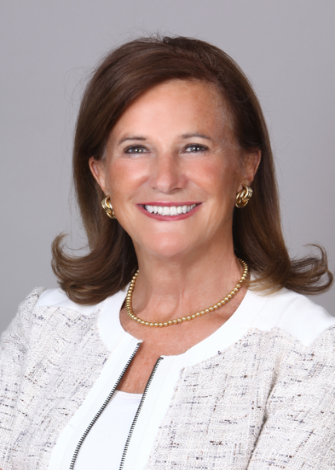
Dr. Marie-Elisabeth Paté-Cornell is the Burt and Deedee McMurtry Professor in the School of Engineering and a Senior Fellow (by courtesy) of the Stanford Freeman-Spogli Institute for International Studies. Her specialty is engineering risk analysis, with applications to complex systems (space, medical, offshore oil platforms, cyber security, etc.). Her work has been based on probabilistic and stochastic models and on Artificial Intelligence. She is a member of the National Academy of Engineering, the French Académie des Technologies, the NASA Advisory Council, and a Distinguished Visiting Scientist of the Jet Propulsion Lab. She was a member of the President’s Foreign Intelligence Advisory Board (2001 to 2008). She holds a BS in Mathematics and Physics, Marseille (France), an Engineering degree (Applied Math/CS) from the Institut Polytechnique de Grenoble (France), an MS in Operations Research (OR) and a PhD in Engineering-Economic Systems (EES), both from Stanford University. She is the author or coauthor of numerous publications including several Best Paper awards. She was awarded the 2002 Distinguished Achievement Award of the Society for Risk Analysis (of which she is a Fellow), the INFORMS Ramsey Medal of Decision Analysis (2010), an Honorary PhD from the University of Strathclyde (2016), and the IEEE Ramo medal for Systems Engineering and Science in 2021.
Go Back
KWAN RIM
Chairman, Samsung Advanced Institute of Technology (SAIT)-South Korea
Dr. Kwan Rim is the Chairman of Samsung
Advanced Institute of Technology (SAIT), the central research laboratory of
the Samsung Group. He received his M.S. in Mechanical Engineering in 1958
and Ph.D. in Theoretical and Applied Mechanics in 1960, both from
Northwestern University in the USA.
In 1960 he joined the Department of Mechanics and Hydraulics of the
University of Iowa and was an engineering faculty member there until 1995.
At the University of Iowa he was Chairman of the Department of Mechanics and
Hydraulics (1971-74), Associate Dean of Engineering (1974-79), Chairman of
the Division of Materials Engineering (1978-84), and Chairman of the
Department of Biomedical Engineering (1984-90). He is the founder of the
Biomedical Engineering Program at Iowa as well as the Iowa Institute of
Biomedical Engineering.
Dr. Rim held the U.S. National Science Foundation’s SEED (Scientists and
Engineers for Economic Development) Professorship in 1976-77, served as the
President of the Korea Advanced Institute of Science and Technology (KAIST)
from 1982 to 1984, and as a visiting professor in Japan in 1992. He has also
served on the boards of directors of numerous educational and research
institutes. He was the 1992 recipient of the Outstanding Biomedical
Engineering Educator Award from the American Society for Engineering
Education. He also served on the President’s Council on Science and
Technology of the Republic of Korea.
Go Back
EDWARD B. ROBERTS
David Sarnoff Professor of the Management of Technology; Chair, Massachusetts Institute of Technology (MIT) Entrepreneurship Center-USA
A long-time expert on entrepreneurial endeavors,
Edward Roberts has literally written the book on high-tech business creation and
growth. His Entrepreneurs in High-Technology: Lessons from MIT and Beyond (Oxford
University Press, 1991) won the Association of American Publishers Award for
Outstanding Book in Business and Management. Roberts is Founder and Chair of the
MIT Entrepreneurship Center, and for over 30 years chaired the Sloan School’s
Management of Technological Innovation and Entrepreneurship Group. He co-founded
and co-chaired for nearly 20 years the mid-career MIT Management of Technology
(MOT) Program. Over the past 40 years, Dr. Roberts has become internationally known
for his research, teaching and active involvement in many aspects of technology
management, including technology strategy, corporate venturing, product innovation
management, and technology-based entrepreneurship. He served as co-director of the
MIT International Center for Research on the Management of Technology. When not
occupied with his MIT responsibilities, Roberts is actively involved as a co-founder,
board member and angel investor in many high-tech start-ups. Dr. Roberts co-founded
and was CEO of Pugh-Roberts Associates, an international management consulting firm
specializing in system dynamics, strategic planning and technology management, now a
division of PA Consulting Group. He co-founded and is a director of Medical Information
Technology, Inc., a leading producer of healthcare information systems, and also
co-founded and is a director of Sohu.com, Inc., a leading Chinese internet firm. In
addition, Roberts co-founded and was for 20 years a General Partner of the Zero Stage
Capital and First Stage Capital Equity Funds, a group of venture capital funds investing
in early-stage technology-based firms. He has been a co-founder and/or director of
numerous emerging technology companies, including at present Advanced Magnetics,
Pegasystems, PR Restaurants and Interactive Super Computers. Professor Roberts has
authored 160 articles and 11 books, the most recent being Innovation: Driving Product,
Process and Market Change (Jossey-Bass/Wiley, 2002). Roberts has four degrees from MIT
in electrical engineering (B.S. and M.S.), management (M.S.), and economics (Ph.D.).
Go Back
MELISSA SCHILLING
Professor, Stern School of Business, New York University, New York, USA
 Dr. Melissa Schilling is John Herzog
Family Professor of Management at
New York University Stern School
of Management. She specializes in
Strategic Management, Technological
Innovation and Entrepreneurship.
Her B.S. degree in Business Administration
with majors in Finance,
Marketing and Biology is from the
University of Colorado, Boulder; her
PhD in Strategic Management is from the University of
Washington. She is the winner of the Best Paper Award
for her paper in Management Science and Organization
Science, and the recipient of numerous research grants
from Kauffman Foundation, National Science Foundation
and other funding agencies. Dr. Schilling is the author
of more than 200 papers, book chapters, cases and
conference presentations. Her most recent book, Quirky:
The remarkable story of the traits, foibles, and genius
of breakthrough innovators that changed the world, is a
deep dive into the lives of Elon Musk, Steve Jobs, Marie
Curie, Nikola Tesla, Thomas Edison, Benjamin Franklin,
Albert Einstein and Dean Kamen. It shows the unusual
things they had in common, how these characteristics led
to innovation, and how we can nurture our own breakthrough
innovation potential.
Dr. Melissa Schilling is John Herzog
Family Professor of Management at
New York University Stern School
of Management. She specializes in
Strategic Management, Technological
Innovation and Entrepreneurship.
Her B.S. degree in Business Administration
with majors in Finance,
Marketing and Biology is from the
University of Colorado, Boulder; her
PhD in Strategic Management is from the University of
Washington. She is the winner of the Best Paper Award
for her paper in Management Science and Organization
Science, and the recipient of numerous research grants
from Kauffman Foundation, National Science Foundation
and other funding agencies. Dr. Schilling is the author
of more than 200 papers, book chapters, cases and
conference presentations. Her most recent book, Quirky:
The remarkable story of the traits, foibles, and genius
of breakthrough innovators that changed the world, is a
deep dive into the lives of Elon Musk, Steve Jobs, Marie
Curie, Nikola Tesla, Thomas Edison, Benjamin Franklin,
Albert Einstein and Dean Kamen. It shows the unusual
things they had in common, how these characteristics led
to innovation, and how we can nurture our own breakthrough
innovation potential.
Go Back
DONNA SHIRLEY
Assistant Dean of Engineering for Advanced Program Development,
University of Oklahoma
Former Manager, Mars Exploration Program-USA
 Donna
Shirley is currently Assistant Dean of Engineering for Advanced Program
Development at the University of Oklahoma, where she is participating in
strategic planning and the development of new educational initiatives. She
is also the official Spokesperson for the Mars Millennium Project, an
international, K through 12 educational initiative sponsored by the White
House MillenNium Council, the Department of Education, the National
Endowment for the Arts, the National Aeronautics and Space Administration,
and the J. Paul Getty Trust. Donna
Shirley is currently Assistant Dean of Engineering for Advanced Program
Development at the University of Oklahoma, where she is participating in
strategic planning and the development of new educational initiatives. She
is also the official Spokesperson for the Mars Millennium Project, an
international, K through 12 educational initiative sponsored by the White
House MillenNium Council, the Department of Education, the National
Endowment for the Arts, the National Aeronautics and Space Administration,
and the J. Paul Getty Trust.
In addition to three honorary doctorates, Ms. Shirley has a BS (University
of Oklahoma) and MS (University of Southern California) in Aerospace
Engineering, and a BA in Journalism (University of Oklahoma). She has over
35 years of experience in the aerospace industry, including more than 25
years in management. Her honors include the NASA Exceptional Leadership
Medal; The American Society Of Mechanical Engineers Holley Award; and
membership in the American Academy of Achievement, the Women In Technology
International Hall Of Fame, and the Oklahoma Aviation and Space Hall Of
Fame. She retired in 1998 from NASA's Jet Propulsion Laboratory where she
was manager of the Mars Exploration Program.
The Mars Exploration Program - which was begun in 1994 with the highly
successful Mars Global Surveyor and Mars Pathfinder missions - is sending
orbiters, landers and/or rovers to Mars in every opportunity (every 26
months) through at least 2005, despite the loss of two missions in 1999.
Prior to becoming manager of the program, Ms. Shirley managed the team
which designed and built "Sojourner Truth,” the Microrover which was
landed by the Mars Pathfinder project on the surface of Mars on July 4,
1997. Sojourner investigated the Martian surface for nearly three months -
more than ten times its expected lifetime. In her 32-year career at JPL
Ms. Shirley's positions included: Project Engineer for the Cassini mission
to Saturn, Manager of Exploration Initiative Studies, Manager of
Automation and Robotics, Manager of JPL's Space Station
Program, Manager of the Mission Design Section, and Project Engineer for
the Mariner 10 mission to Venus and Mercury in 1974.
Between 1990 and 93, as a part-time assignment, she established and led a
NASA-wide Systems Engineering Working Group which developed and documented
a standard systems engineering process for NASA Projects. As an outgrowth
of this, in the summer of 1991 she led another NASA-wide team on
Program/Project Management which developed recommendations subsequently
incorporated into the NASA Management Instruction for project management.
In addition to over 50 technical publications, she has written a book on
Managing Creativity and has developed a class on that subject which is now
offered at and through the University of Oklahoma in a variety of formats.
She continues to be a widely sought-after speaker on subjects including
Mars Exploration and Management, and has appeared in many national
television news programs and documentaries. Broadway Books published her
autobiography, titled Managing Martians, in 1998 and 1999.
Raised in Wynnewood, Oklahoma, Ms. Shirley now lives in Norman, Oklahoma.
She has one daughter, Laura, who is a graduate student in psychology.
Go Back
HRH PRINCESS MAHA CHAKRI SIRINDHORN
Thailand
 Her Royal Highness received a Bachelor of Arts Degree (First Class Honor), with a major in History and minor in Pali-Sanskrit and Thai. She received a Master of Arts degree in Oriental Epigraphy in 1979 from Silpakorn University. At the same time, she studied at Chulalongkorn University, where she earned a Master of Arts degree in Pali-Sanskrit in 1981. In 1986 she received a doctorate degree in Development Education from Srinakharinwirot University. Her Royal Highness received a Bachelor of Arts Degree (First Class Honor), with a major in History and minor in Pali-Sanskrit and Thai. She received a Master of Arts degree in Oriental Epigraphy in 1979 from Silpakorn University. At the same time, she studied at Chulalongkorn University, where she earned a Master of Arts degree in Pali-Sanskrit in 1981. In 1986 she received a doctorate degree in Development Education from Srinakharinwirot University.
Her Royal Highness began her teaching career in 1979, when she started teaching general education at Chulalongkorn University. A year later, she joined the Department of Law and Social Sciences, in the Academic Division of Chulachomklao Royal Military Academy. At present she is Director of the Department of History at the Academy, where she has played an important role in revising its curriculum. She supervises the Thai Music Club of the Academy. She gives lectures at several other institutions, and she regularly attends academic conferences and seminars both in Thailand and abroad.
Besides her main duty at the Military Academy, she also works on other functions, mostly concerned with development and philanthropic works. Her projects mostly focus on education, food and nutrition to provide basic life necessities for people who are in need. In her development work, she has used technologies such as IT, biotechnology, agricultural science, medicine and public health widely to enhance livelihood and well-being of the Thai people, particularly those in the remote areas: people with disabilities, prison inmates, victims of natural disasters, minority groups and other marginalized populations. She has engaged in technology integration and management in practice in many of those projects in order to achieve the desired outcomes.
Her Royal Highness is active in several philanthropic organizations and foundations. She has been Executive Vice President of the Thai Red Cross Society since 1977. She has been Executive Chairman of the Chaipattana Foundation since 1988 (in charge of His Majesty the King’s development and environmental preservation projects), of Ananda Mahidol Foundation since 1995 (to promote higher education), and of King Rama II Foundation since 1977 (to conserve and promote Thai cultures). She has been the President of Sai Jai Thai Foundation since 1975 (to support disabled veterans), and of Prince Mahidol Award Foundation since 1992 (to award prizes annually to members of the international community for outstanding performances in the fields of medicine and public health). She was the Advisor to the Committee of the Thai Junior Encyclopedia Project by Royal Command of His Majesty the King. She is the chairperson of the Information Technology Project Committee (ICT Fund) under the Initiatives of HRH Princess Maha Chakri Sirindhorn since 1995.
In addition, she contributes a great deal to international organizations. For example, she is Special Technical Advisor on Health of Marginalized Populations for the Southeast Asian and the Western Pacific Regions World Health Organization; Honorary Committee Member, the Health Advisory Board, Bloomberg School of Public Health, Johns Hopkins University; a Trustee of the Council of Refugee Education Trust; Special Ambassador of the United Nations World Food Program for School Feeding; and UNESCO Goodwill Ambassador (Ethnic Children Education).
In addition to over 50 technical publications, she has written a book on
She has received international awards and positions such as Ramon Magsaysay (Public Service, 1991), Indira Gandhi (Peace, Disarmament and Development, 2004), International Telecommunication Union (Helping People with Disabilities using ICT, 2006), and International Union of Nutritional Sciences (Nutrition Improvement to Development of the Disadvantaged Population, 2009). She speaks Thai, English, French, Chinese, and some German.
Go Back
DAVID M. STEELE
San Jose State University, USA
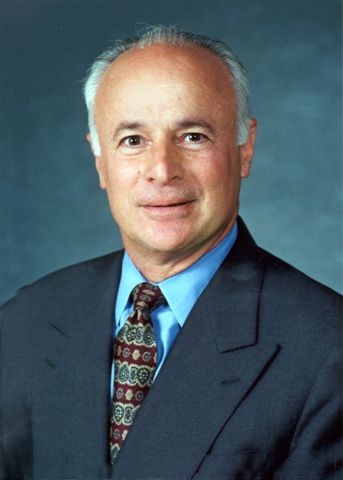 Dr. David M. Steele joined San Jose State University (SJSU) as Dean, College of Business and Lucas Graduate School of Business, in July, 2008. He is building on the College?s strengths by enhancing academic quality and student success; and by emphasizing practical business knowledge and global business education, including the new Thompson Global Internship Program. Dr. David M. Steele joined San Jose State University (SJSU) as Dean, College of Business and Lucas Graduate School of Business, in July, 2008. He is building on the College?s strengths by enhancing academic quality and student success; and by emphasizing practical business knowledge and global business education, including the new Thompson Global Internship Program.
Previously, he was Dean of the Silberman College of Business at Fairleigh Dickinson University, which includes the prestigious Rothman Institute of Entrepreneurial Studies; and Professor and Dean of the College of Business at Florida Institute of Technology.
Dr. Steele rose through the ranks of Chevron Corporation (ranked Fortune # 3 today) to become President of Chevron Latin America. He had a broadly diversified career track in R&D, project engineering, finance, strategic planning, and IT before moving to senior executive management positions. After leaving Chevron, Dr. Steele was an Executive Consultant to the founders of four international early-stage ventures, serving as Interim CEO of one of these ventures, a software startup.
Dr. Steele attended Birmingham University in England, receiving BS and Ph.D. degrees in Chemical Engineering. He later completed graduate business training at UC Berkeley and at the Wharton School.
Go Back
NAM P. SUH
President, Korea Advanced Institute of Science and Technology (KAIST), Korea
Dr. Nam Pyo Suh has been the President of the Korea Advanced Institute of Science and Technology (KAIST) since July 13, 2006.
Dr. Suh was a member of the Presidential Committee on Science and Technology of Korea (2009-2010) and the chairman of the Commission for New Economic Growth of the Ministry of Economy and Knowledge (2008-2009). He was also the President of the Accreditation Board of Engineering Education of Korea (ABEEK).
Previously, he had been at MIT (1970-2008), where he was Director of the Park Center for Complex Systems (formerly the Manufacturing Institute) and the Head of the Department of Mechanical Engineering (1991-2001). He was also the Founding Director of the MIT Laboratory for Manufacturing and Productivity (1977-1984), the Founder and Director of the MIT-Industry Polymer Processing Program (1973-1984). He is now the Ralph E. & Eloise F. Cross Professor, Emeritus.
In October 1984, Professor Suh took a leave of absence from MIT to accept a Presidential Appointment at the National Science Foundation, where he was in charge of engineering. He returned to MIT in January 1988. For his contributions, he received the Distinguished Service Award of the National Science Foundation.
Dr. Suh has received many awards and honors. He received seven honorary doctoral degrees: Doctor of Humane Letters from the University of Massachusetts-Lowell in 1988, Doctor of Engineering from Worcester Polytechnic Institute in 1986, Honorary Doctor (Tekn. Hedersdoktor) from the Royal Institute of Technology (KTH), Stockholm, Sweden, in 2000, Doctor of Engineering Honoris Causa, University of Queensland in 2007, Doctor Scientiarum Honoris Causa from the Technion, Israel Institute of Technology in 2007, Doctor of Science and Technology from Carnegie-Mellon University in 2008, and Honoris Causa from Babeş-Bolyai University, Cluj-Napoca, Romania, in 2009. Also, in 2011 the Technical University of Denmark awarded him the Gold Medal, its highest honor.
He is the recipient of the 2009 ASME Medal, the highest honor bestowed by the American Society of Mechanical Engineers. In 2006, he received the General Pierre Nicolau Award, the highest honor given by the International Academy for Production Engineering (CIRP). Also from ASME, he received the Gustus L. Larson Memorial Award, the Blackall Award, the Best Tribology Paper Award, and the William T. Ennor Manufacturing Technology Award. Time selected his invention of the On-Line Electric Vehicle (OLEV) as one of "The 50 Best Inventions of 2010." Mobile Harbor was ranked second in the "10 best start-up ideas of 2011" by StartupSmart, an Australia-based consultancy firm. Also in 2010, the MIT Geospatial Data Center created the "Professor Nam Suh Award for Innovation in Design of Software Systems."
In 2011, the Society for Design and Process Science (SDPS) selected him for the 2011 transformative Achievement Medal and the Korea Economic Institute awarded him the Korean-American Achievement Award. In 2008, he was given the second Pony Chung Award of the Pony Chung Foundation and the Inchon Education Award of the Inchon Memorial Foundation. He received the F.W. Taylor Research Award of SME; an SPE Best Paper Award; Federal (NSF) Engineer of the Year Award from NSPE; and the American Society for Engineering Education Centennial Medallion. He was also awarded the National Science Foundation's Distinguished Service Award. In 1994, he was awarded the KBS Korean Compatriot Award for Scholarly Achievements. He is also the winner of the 1997 Ho-Am Prize for Engineering. In 2000, he was the recipient of the Mensforth International Gold Medal of the Institution of Electrical Engineers of the United Kingdom. In 2001, he received the Hills Millennium Award from the Institution of Engineering Designers of the United Kingdom. In 2006, the Academy of Transdisciplinary Learning and Advanced Studies (Society for Design and Process Science) awarded him the Academy Gold Medal of Honor. In 2007, he received the Lifetime Achievement Award of SPE. He was awarded the 2008 Proud Korean award for educational contributions by the Korea Association of Journalists and the Distinguished Alumni Award by Carnegie Mellon University.
He is the author of over 300 papers and seven books, holds more than 70 patents, and edited several books. Among the books he has authored are Elements of the Mechanical Behavior of Solids (with A.P.L. Turner published by McGraw-Hill, 1975), Tribophysics (Prentice-Hall, 1986; translated into Chinese), The Principles of Design (Oxford University Press, 1990; translated into Japanese and Korean), The Delamination Theory of Wear (Elsevier, 1974), Axiomatic Design: Advances and Applications (Oxford University Press, 2001, also translated into Japanese and Chinese), Complexity: Theory and Applications (Oxford University Press, 2004), and Axiomatic Design and Fabrication of Composite Structures (with D. G. Lee, Oxford University Press, 2004).
His contributions to the field of tribology include the delamination theory of wear, the solution wear theory, a theory on the genesis of friction, coated cutting tools, the use of undulated surfaces to lower friction and wear, and new woven electrical connectors. The Institute of Scientific Information (ISI) chose his paper on delamination theory of wear as the citation classic. His invention of electric connectors that have low friction and low contact resistance (originally manufactured by Tribotek, Inc., now acquired by Methode Electronics, Inc.) received the Product of the Year award of Power Electronics Technology magazine in 2005. In the field of design, he has developed Axiomatic Design theory, which is taught worldwide. It is required for certification of Master Black Belts by the American Society of Quality. He also advanced a theory of complexity and the concept of Functional Periodicity. In the field of polymer processing, he invented many industrially important processes and devices, including microcellular plastics (commercially known as MuCell, trademark of Trexel, Inc.), the USM foam molding process, the Axiometer for moisture measurement in polymers, the Electrostatic Charge Decay NDE technique (commercialized by QEA, Inc.), and the foam/straight plastic lamination/forming process (sold in billions by Sweetheart Plastics, Inc.). In metal processing, he is the inventor of a new metal processing technique called the Mixalloy Process. At KAIST, he invented the on-line electric vehicle (OLEV) and the Mobile Harbor (MH). OLEV is being commercialized by two firms.
Professor Suh was a Series Editor for the Advanced Manufacturing Series and an Editor of the MIT/Pappalardo Series in Mechanical Engineering of Oxford University Press. He was also the Founding Co-Editor-in-Chief of the International Journal Robotics and Computer-Integrated Manufacturing from 1981 to 1996, and also serves on editorial boards of many journals.
He is a member of the Board of Directors of Axiomatic Design Software, Inc., and Parker Vision, Inc. He is a member of the Board of Trustees of King Abdullah University of Science and Technology (KAUST) and a member of the International Advisory Board of the King Fahd University of Petroleum and Minerals (KFUPM) of Saudi Arabia, and the Khalifar University of Science, Technology and Research (KUSTAR) of UAE. He has been a consultant for many industrial firms. He was a member of the board of directors of Silicon Valley Group, Inc., Therma Wave, Inc., the founder and member of the board of directors of Trexel, Inc., Integrated Device Technologies, and Triboteck, Inc.
He is a Fellow of the University of Tokyo. He is an Honorary Professor at Yanbian University of Science and Technology, China; Honorary Professor of the University of Hong Kong; and Advisory Professor of Shanghai Jiaotong University, China. He was an Eminent Visiting Professor at the Korea Advanced Institute of Science and Technology, Korea. He has been on visiting committees of Georgia Institute of Technology, Stanford University, the University of Michigan, and the University of California - Berkeley. He was a member of the DoD Panel on "Global War on Terrorism" and served on a research award committee of ASEE. He was a consultant of the Lawrence Livermore National Laboratory and Korea Electric Power Research Institute. He was a member of the Visiting Committee for the National Institute of Standards and Technology (a statutory committee). In addition, he was a member of the Development and Advisory Council of the Texas A&M University Department of Mechanical Engineering and a member of the Science Board of MacroChem Corporation. He served on advisory committees of the Lawrence Livermore National Laboratory, the Idaho National Engineering Laboratory, and Alcan Aluminum Corporation. He was a member of several NRC and NAE committees. He was also the chairman of the ASME Productivity Committee. He was a member of the Scientific Committee of the ENDREA Program of Sweden. He also evaluated a Kplus Center in Austria.
He has consulted extensively for governments, the World Bank, the United Nations, universities, and many industrial firms throughout the world on various technical matters, the development of economic policies, and the creation of new products and processes. He was the architect of the Five-Year (1980-85) Economic Development Plan of the Republic of Korea.
Professor Suh was educated at Buckingham, Browne and Nichols School (1955), MIT (S.B., 1959, and S.M., 1961) and Carnegie-Mellon University (Ph.D., 1964).
Go Back
PAIRASH THAJCHAYAPONG
Permanent Secretary, Ministry of Science and Technology—Thailand
Dr. Pairash Thajchayapong was born in 1944 in
Kamphaeng Phet, Thailand. In 2004 he became Thailand’s Permanent Secretary, Ministry of
Science and Technology. He served as President of the National Science and Technology
Development Agency (NSTDA), Ministry of Science, Technology and Environment from
1998-2004. He is currently Chairman of the National Electronics and Computer
Technology Center (NECTEC) (1998—present), and he is the Assistant Director for
Engineering and Computer, Chulabhorn Research Institute (1988—present).
Dr. Thajchayapong was a professor at King Mongkut’s Institute of Technology
Ladkrabang, Thailand, from 1977-1998, where he also served as Rector (1992-1998)
and as Director of the Computer Research and Services Center (1987-1998). From
1987-1998 he was Director of the National Electronics and Computer Technology Center.
He received a B.Sc. in Electrical Engineering in 1969 from the Imperial
College of Science and Technology, University of London, United Kingdom; and in 1973 a Ph.D. in
Electronics and Computer Engineering from the University of Cambridge, United Kingdom.
Dr. Thajchayapong is a member of The Institute of Electrical and Electronics Engineers
(IEEE) USA; The Royal Institute, Thailand; and The Science Society of Thailand under
the Patronage of His Majesty the King, Thailand. He is Assistant Director of IT Project under
the initiative of H.R.H.Princess Maha Chakri Sirindhorn, and Chairman, the Committee of
Nomination Science and Technology Research Grants, Thailand Toray Science Foundation.
Go Back
TAKESHI UCHIYAMADA
Chairman of the Board, Toyota Motor Corporation, Japan
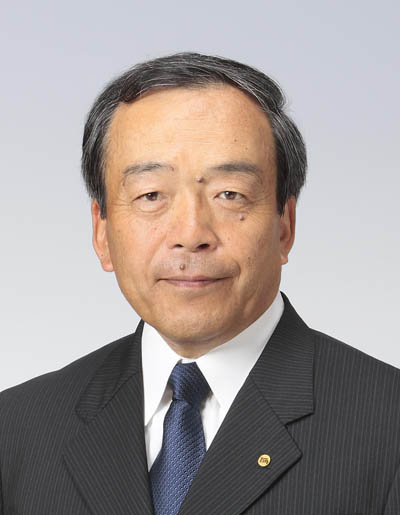
Mr. Takeshi Uchiyamada graduated from Nagoya University
with a degree in applied physics in March 1969
and joined Toyota Motor Corporation
(TMC) in April the same year.
In January 1994, Mr. Uchiyamada
became project general manager of
Vehicle Development Center 2. In
January 1996, he became chief engineer
of that center, which developed
the Prius—the world's first
mass-produced gasoline-electric
hybrid car.
After being named to the Board of Directors in June 1998,
Mr. Uchiyamada oversaw Vehicle Development Center
3. In June 2000, he became chief officer of Vehicle Development
Center 2, and in June 2001, managing director
and chief officer of the Overseas Customer Service
Operations Center. Mr. Uchiyamada was made a senior
managing director and also appointed chief officer of the
Vehicle Engineering Group in June 2003. In June 2004, he
became a chief officer of the Production Control & Logistics
Group, and in June 2005, he became executive vice
president and member of the board. Mr. Uchiyamada was
appointed vice chairman of the board in June 2012. He
became chairman of the board in June 2013. He is also
vice chairman of Nippon Keidanren (Japan Business Federation)
since June 2013.
Go Back
JAMES M. UTTERBACK
David J. McGrath jr (1959) Professor of Management and Innovation Professor of Engineering Systems, Massachusetts Institute of Technology, —United States
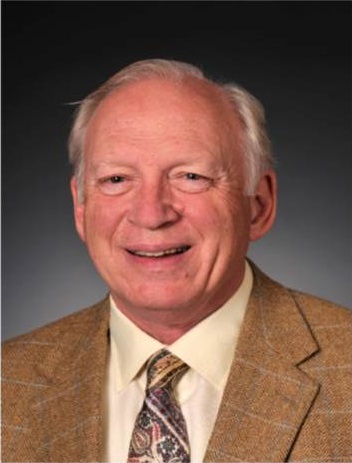
Dr. James M. Utterback is David J.
McGrath jr (1959) Professor of Management
and Innovation at the MIT
Sloan School of Management and
Professor of Engineering Systems
in the School of Engineering at the
Massachusetts Institute of Technology.
Since receiving the Ph.D. in
1968 from the MIT Sloan School
of Management, Dr. Utterback has
held faculty positions at Indiana University, the Harvard
Business School, and Chalmers Technical University as
well as MIT. From 1983 through 1989, he served as Director
of Industrial Liaison at MIT. He is author of Mastering
the Dynamics of Innovation, published by Harvard
Business School Press in 1994, and of Design-Inspired Innovation,
published by World Scientific Press in 2006.
His current research examines the sustained growth of
newly formed technology-based firms worldwide at the
confluence of bio and nanotechnology.
Dr. Utterback received the D.Sc. (Hon) from Chalmers
University in Gothenburg, Sweden, in 1997, and was
elected a foreign member of the Royal Swedish Academy
of Engineering Sciences in 1999. He was elected a Life
Fellow of Clare Hall at the University of Cambridge in
2006. Last year he received an honorary doctorate from
Katholieke Universiteit Leuven in Belgium.
Go Back
ERIC VON HIPPEL
Professor and Head of the Technological Innovation and Entrepreneurship Group,
Massachusetts Institute of Technology, Sloan School of Management—United States

Eric von Hippel is Professor and Head of the
Technological Innovation and Entrepreneurship Group at the MIT Sloan School of
Management. He is a graduate of Harvard College (BA), MIT (MS) and Carnegie Mellon University
(PhD). His research examines the sources of and economics of innovation, with a particular focus
on the significant role played by “lead users” in the innovation development process. In a new
book, Democratizing Innovation, he reports on the latest work in this field (MIT Press, 2005).
Go Back
Jack Welch
CEO, General Electric-USA
 Jack Welch was born in
Salem, Massachusetts, in 1935. He graduated in 1957 from the University of
Massachusetts with a B.S. in chemical engineering. He later received M.S.
and Ph.D degrees in chemical engineering from the University of Illinois. Jack Welch was born in
Salem, Massachusetts, in 1935. He graduated in 1957 from the University of
Massachusetts with a B.S. in chemical engineering. He later received M.S.
and Ph.D degrees in chemical engineering from the University of Illinois.
Welch joined General Electric in 1960. He was named vice-president in 1972,
senior vice-president in 1977, vice-chairman in 1979, and became GE's
youngest and eighth Chairman and CEO in 1981.
During his 20-year tenure as CEO of GE, Welch transformed the corporation
with his leadership, increasing the market value of the company from $12
billion in 1981 to approximately $280 billion in 2001.
Dr. Welch left his position as CEO in 2001 and became a corporate consultant
to a group of Fortune 500 companies. His memoir of his life and business
strategies, Straight From the Gut, was published in September 2001.
Go Back
JONG-YONG YUN
Vice Chairman and CEO
Samsung Electronics Co., Ltd.-South Korea
 Mr. Yun is the Vice Chairman and CEO of Samsung Electronics
Co., Ltd. in Korea. He received his degree in Electrical Engineering from
Seoul National University and joined the Samsung Group in 1966, and
continually rose through the ranks of the company. He became Electronics Group
Vice President in 1988 and completed the MIT Sloan School Senior Executive
Program the same year. After serving as president and CEO of several business
groups and Samsung companies, he became the President and CEO of Samsung
Electronics Co. in 1996, and was promoted to his current position of CEO and
Vice Chairman in 1999. Mr. Yun is the Vice Chairman and CEO of Samsung Electronics
Co., Ltd. in Korea. He received his degree in Electrical Engineering from
Seoul National University and joined the Samsung Group in 1966, and
continually rose through the ranks of the company. He became Electronics Group
Vice President in 1988 and completed the MIT Sloan School Senior Executive
Program the same year. After serving as president and CEO of several business
groups and Samsung companies, he became the President and CEO of Samsung
Electronics Co. in 1996, and was promoted to his current position of CEO and
Vice Chairman in 1999.
In his CEO’s message to Samsung’s customers and shareholders in 2002, Mr. Yun
articulated his views and strategies for his company by saying “The 21st
century marks a new starting point for Samsung Electronics’ second 30 years of
doing business. Keep your eye on us as we emerge as the leader in the digital
convergence revolution and a world-class company that is recognized around the
globe.”
Mr. Yun’s philosophy in guiding Samsung Electronics Co. to greatness is
reflected in his many, often-quoted statements, including:
“Determination and a ‘go for it’ attitude can turn crisis into unlimited
opportunities.”
“Management must be an ongoing process of innovation. Process innovation
starts with change, and change must start with the reform of consciousness.”
“Technology is the lifeblood of electronics industry – ‘technology’ is the
only currency that will beget technology.” Among the many awards bestowed upon
Mr. Yun are the Korean government’s Bronze and Gold Medals for contributions
to industry (1990 and 1992), Seoul National University’s Honorable Engineering
Alum award (1995), IIE’s “Outstanding Achievement in Management” award (1998),
Korea Management Association’s “Most Successful CEO in Korea” Award (1999),
Business Week’s “Top 25 Managers of the Year” listing (2000), and Fortune
Magazine’s “Asia’s Businessman of the year award (2000). Most recently Mr. Yun
was featured on the cover of Business Week in June 2003.
Go Back
MUHAMMAD YUNUS
Managing Director
Grameen Bank, Bangladesh
 Professor Muhammad Yunus was born on June 28, 1940. He is the founder and Managing Director of Grameen Bank, which pioneered microcredit – a method of banking where small loans are given to the poor, mostly to women, without collateral, for income generating activities, with high repayment rate, to help them get out of poverty. Professor Muhammad Yunus was born on June 28, 1940. He is the founder and Managing Director of Grameen Bank, which pioneered microcredit – a method of banking where small loans are given to the poor, mostly to women, without collateral, for income generating activities, with high repayment rate, to help them get out of poverty.
The third oldest of nine children, Yunus was born in the village of Bathua, Chittagong. His father was Haji Muhammad Dula Mia Shawdagar, a jeweler, and his mother was Sofia Khatun. In 1944, his family moved to the city of Chittagong, and he studied at Lamabazar Primary School. Later, he passed the matriculation examination from Chittagong Collegiate School.
During his school years, he was an active Boy Scout, and traveled to West Pakistan and India in 1952; to Europe, the USA, and Canada in 1955; and to the Philippines and Japan in 1959 to attend Jamborees. In 1957, he enrolled in the department of economics at Dhaka University and completed his BA in 1960 and MA in 1961.
Following his graduation, Yunus joined the Bureau of Economics, Dhaka University. Later he was appointed as a lecturer in economics in Chittagong College in 1961. In 1965, Yunus was offered a Fulbright scholarship to study in the United States. He obtained his Ph.D. in economics from Vanderbilt University in the United States in 1969. From 1969 to 1972, Yunus was an assistant professor of economics at Middle Tennessee State University in Murfreesboro, Tennessee.
During the Liberation War of Bangladesh in 1971, Yunus founded a Citizen's Committee in Nashville, Tennessee, published a newsletter named Bangladesh Newsletter, and ran the Bangladesh Information Center in Washington, DC, with other Bangladeshis living in the United States, to raise support for the liberation of East Pakistan, and lobby the US Congress to stop military aid to Pakistan. Inspired by the birth of Bangladesh in 1971, Yunus returned to Bangladesh in 1972, and joined the Economics Department of University of Chittagong after a brief spell in the Planning Commission. He became actively involved with poverty reduction after observing the famine of 1974, and established Rural Economics Programme as a part of the Department’s academic program. In 1975, he organized Nabajug (New Era) Tebhaga Khamar (three share farm), which the government later adopted as the Packaged Input Programme.
In 1976, during visits to very poor households in the village of Jobra near Chittagong University, Yunus discovered that very small loans could make an enormous difference to a poor person’s life. Jobra women who made bamboo furniture had to take out loans at usurious rates for buying bamboo, and had to give up their profits to the moneylenders. Shocked by this reality, he lent USD 27.00 from his own pocket to 42 people in the village to help them pay back their loans to the loan-sharks and be free.
When he approached traditional banks to lend to the poor, he found that they were not interested as the poor were not considered creditworthy. Yunus strongly believed that given the chance the poor will repay the borrowed money, and that it would help the poor work their way out of poverty. After many efforts, in December 1976 Yunus finally succeeded in securing a credit line, offering himself as the guarantor, for his project from Janata Bank to lend it to the poor in Jobra. On October 2, 1983, the project was converted into a full-fledged bank named Grameen Bank (Village Bank), which specialized in making small loans to the poor.
As of May 2008, Grameen Bank (GB) has 7.5 million borrowers, 97 percent of whom are women. With 2,515 branches, GB provides services in 82,072 villages, covering more than 97 percent of the total villages in Bangladesh. Since its inception, it has lent over USD 7 billion to the poor people with a near 100 percent repayment rate. All of its money comes from the depositors of the bank.
Yunus has also founded a number of companies in Bangladesh to address diverse issues of poverty and development. These include Grameen Phone (a mobile telephone company), Grameen Shakti (Grameen Energy), Grameen Fund (social venture capital company), Grameen Textile company, Grameen Knitwear company, Grameen Education company, Grameen Agriculture company, Grameen Fisheries and Livestock company, Grameen Business Promotion company, Grameen Danone Foods Ltd., Grameen Healthcare Services, among others. He is also founder of the Grameen Trust, which extends the Grameen microcredit system all over the world.
In October 2006, Muhammad Yunus was awarded the 2006 Nobel Peace Prize, along with Grameen Bank, for their efforts to create economic and social development. The Norwegian Nobel Committee stated, "Muhammad Yunus has shown himself to be a leader who has managed to translate visions into practical action for the benefit of millions of people, not only in Bangladesh, but also in many other countries. Loans to poor people without any financial security had appeared to be an impossible idea. From modest beginnings three decades ago, Yunus has, first and foremost through Grameen Bank, developed micro-credit into an ever more important instrument in the struggle against poverty.” Muhammad Yunus became the first Bangladeshi and third Bengali to ever receive a Nobel Prize.
He has won a number of other awards, including the Ramon Magsaysay Award, the World Food Prize, and the Sydney Peace Prize. Within Bangladesh, he has received the President's Award (1978); Central Bank Award (1985); and Independence Day Award (1987), the highest national award. The Bangladesh government brought out a commemorative stamp to honor his Nobel Award.
Yunus was inducted as a member of the Legion d'Honneur by President Chirac of France. In January 2008, Houston, Texas declared January 14 as "Muhammad Yunus Day.” He is one of the founding members of Global Elders chaired by Nelson Mandela. He was the 2008 commencement speaker at MIT on June 6, 2008.
Yunus has been awarded 28 honorary doctorate degrees and serves on the board of many national and international organizations. He is the author of two New York Times bestsellers: Banker to the Poor (1997) and Creating a World Without Poverty, Social Business and the Future of Capitalism (2008).
Muhammad Yunus is married to Dr. Afrozi Yunus, and has two daughters, Monica, and Deena.
Go Back
ANNE M. MULCAHY
Chairman and Former CEO
Xerox Corporation, USA
 Xerox Corporation, one of the most enduring brands in business today, is the global leader in document management solutions with $17.6 billion in annual revenues. At its helm is Anne Mulcahy, a 33-year veteran of Xerox who began her career selling copiers, and who has reinvented Xerox into an innovative technology and services enterprise that helps businesses find better ways to do great work. Building on Xerox's rich heritage of social responsibility, Mulcahy ensures that the company's business decisions and actions are aligned with a clear set of corporate values. Xerox Corporation, one of the most enduring brands in business today, is the global leader in document management solutions with $17.6 billion in annual revenues. At its helm is Anne Mulcahy, a 33-year veteran of Xerox who began her career selling copiers, and who has reinvented Xerox into an innovative technology and services enterprise that helps businesses find better ways to do great work. Building on Xerox's rich heritage of social responsibility, Mulcahy ensures that the company's business decisions and actions are aligned with a clear set of corporate values.
Today, Xerox is a financially solid technology company that has completely overhauled its product line and launched Xerox Global Services, offering content management, imaging and consulting services. It doesn’t matter what form the information might take, Xerox has the technology and services to help manage the content and improve communications.
In May 2009, Mulcahy announced that she is retiring as CEO of Xerox, effective July 1, 2009. She will remain as chairman. Mulcahy was named CEO of Xerox on August 1, 2001, and chairman on January 1, 2002. Mulcahy was Xerox president and chief operating officer from May 2000 through July 2001. She began her Xerox career as a field sales representative in 1976 and assumed increasingly responsible sales and senior management positions.
In addition to the Xerox board, Mulcahy is a board director of Citigroup Inc., Fuji Xerox Company, Ltd., Target Corporation, The Washington Post Company, and she is the chairman of the corporate governance task force of the Business Roundtable. She is also a board member of Catalyst, a nonprofit organization supporting women in business.
Go Back
Dr Gabriela Dutrénit
Distinguished Professor at Universidad Autónoma Metropolitana (UAM) and a member of the Mexican Academy of Science, Mexico
 Dr Gabriela Dutrénit is an economist with a PhD in Science and Technology Research Studies from the Science Policy Research Unit (SPRU), University of Sussex, UK. She is a professor in the postgraduate Program in Economics, Management and Policy of Innovation at the Universidad Autónoma Metropolitana (UAM), Mexico. also a “Distinguished Professor” of the UAM and a regular member of the Mexican Academy of Science. Dr. Dutrenit is president of the Latin American Chapter of LALICS (Latin American Network for Economics of Learning, Innovation, and Competence Building Systems). Her research interests include innovation and development; learning and technological capability accumulation at the firm level; university–industry linkages; research and development (R&D), and innovation policy. She has coordinated several evaluations of the Mexican STI policy. Dr Gabriela Dutrénit is an economist with a PhD in Science and Technology Research Studies from the Science Policy Research Unit (SPRU), University of Sussex, UK. She is a professor in the postgraduate Program in Economics, Management and Policy of Innovation at the Universidad Autónoma Metropolitana (UAM), Mexico. also a “Distinguished Professor” of the UAM and a regular member of the Mexican Academy of Science. Dr. Dutrenit is president of the Latin American Chapter of LALICS (Latin American Network for Economics of Learning, Innovation, and Competence Building Systems). Her research interests include innovation and development; learning and technological capability accumulation at the firm level; university–industry linkages; research and development (R&D), and innovation policy. She has coordinated several evaluations of the Mexican STI policy.
Go Back
|



